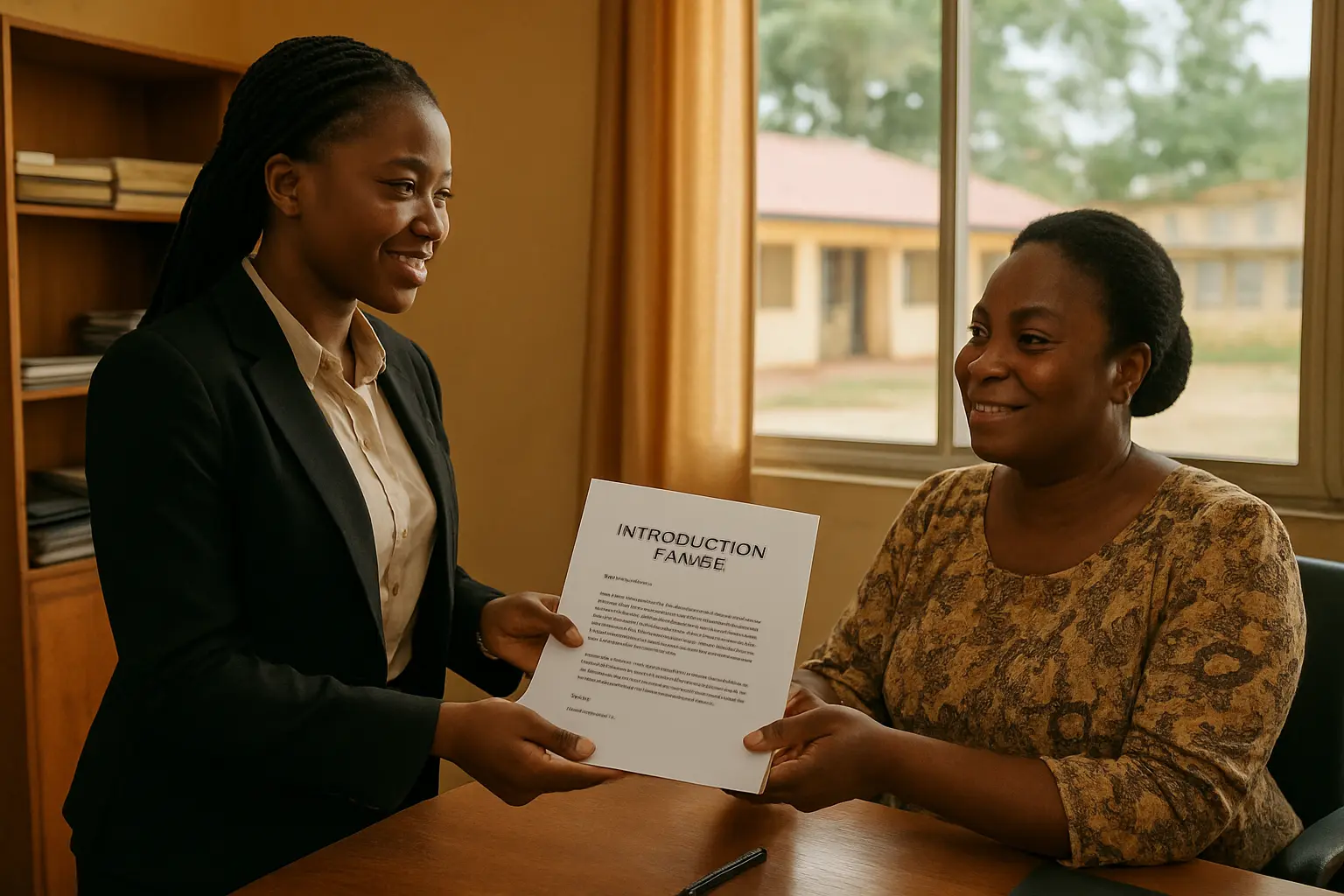
Most Nigerian education final year projects do not go through a national ethics committee the way a health-research project does — there is no single statutory body for education research. What you almost always need instead is written permission from the school or education authority you are studying (a principal, a State Universal Basic Education Board for public primary schools, or a State Ministry of Education for secondary schools), and, if your respondents include children under 18, consent from a parent or guardian in addition to the child’s own assent.
Why education research in Nigeria has no single ethics gatekeeper
Nursing, medicine and public health projects in Nigeria go through Health Research Ethics Committees under the framework of the National Health Act 2014, because they involve biological samples, clinical data or direct patient risk. Education research carries a different, lower-risk profile in most departmental projects — a questionnaire to teachers about classroom practice, an interview with school administrators, an achievement-test comparison between two teaching methods — and Nigeria has no equivalent statutory body specific to education research. That does not mean no approval is needed; it means the approval is institutional and site-level rather than a single national process, and it is your responsibility to find out which layer applies to your specific study.
What actually requires permission before you collect data?
- Access to a public primary or junior secondary school — usually requires a letter to the school through the Local Government Education Authority (LGEA) or the State Universal Basic Education Board (SUBEB), depending on your state’s structure, in addition to the head teacher’s own consent.
- Access to a public senior secondary school — typically requires the State Ministry of Education’s permission alongside the principal’s, since senior secondary schools usually sit under the state ministry rather than SUBEB.
- Access to a private school — the proprietor or principal’s written consent is usually sufficient, since private schools are not bound by the same state-authority chain, though some private-school groups still expect notice to their head office.
- A university or college of education — usually needs the Head of Department’s or Dean’s consent, and sometimes the institution’s own research ethics or postgraduate committee if the study involves staff appraisal data or student records.
- Any respondent under 18 — needs parental or guardian consent in addition to school-level access, plus the child’s own simple assent in age-appropriate language; a school’s permission to enter the building is not the same thing as consent to interview or test a specific minor.
How do you request access, and what should the letter contain?
A request letter to a school or education authority should state: your name, matriculation number and department; your supervisor’s name; the exact title and purpose of your study; what participation will involve (a questionnaire, an interview, classroom observation, an achievement test) and roughly how long it takes; how data will be kept confidential; and a line confirming the study has your department’s approval to proceed to data collection. Most Nigerian departments issue a standard “introduction letter” — collect yours before writing to any school, since several State Ministries of Education and SUBEB offices will not process a request without one attached.
A worked example: two request letters, side by side
The core content is the same; the addressee and one or two lines change. For a public primary school reached through SUBEB, the letter is addressed to the SUBEB office (or the LGEA where the state delegates approval locally), copies the school, and typically adds a line such as: “This letter accompanies my institution’s introduction letter and requests permission to administer a questionnaire to [X] teachers and observe [Y] lessons at [school name] between [dates].” For a private secondary school, the same letter is addressed directly to the proprietor or principal, drops the SUBEB/LGEA addressee line, and instead adds: “I will share a summary of anonymised findings with the school on request.” Neither version should promise something you cannot actually deliver — do not offer a full copy of your raw data, and do not promise a specific timeline you cannot control once you are waiting on your own department’s corrections.
Does your study need your university’s own research ethics or postgraduate committee?
A growing number of Nigerian universities now route any study involving human participants — not only health research — through a faculty or institution-level research ethics committee before data collection, particularly for postgraduate work or any study touching staff performance data, disciplinary records, or student assessment results held by the institution. Check your own faculty handbook or ask your supervisor directly rather than assuming your study is exempt because it is “only education research” — the trend across Nigerian universities in the last few years has been toward requiring more studies to pass through some form of institutional review, not fewer, and a project halted mid-collection for missing this step costs far more time than checking first.
What does informed consent look like for teachers, administrators and parents?
For adult respondents (teachers, head teachers, education officers, parents completing a survey about their child rather than the child themselves), a short written or verbal consent statement covering the study’s purpose, voluntary participation, the right to withdraw, and how confidentiality will be protected is the standard expectation — the same core elements the site’s guide to ethics approval for a nursing project lays out for a health setting apply here, adjusted for a school context rather than a clinical one. For a focus group or interview specifically, the objective-to-question design and consent process described in the site’s own interview and focus group guide for a qualitative education project is the fuller version of the same procedure — use both together if your study is qualitative.
What does the Nigeria Data Protection Act 2023 require in a school setting?
Student names, scores, attendance records and any information that could identify a minor are all personal data under the Nigeria Data Protection Act 2023, and children’s data carries a higher standard of care under the Act than an adult respondent’s. Practically, this means: anonymise or pseudonymise student data as soon as possible after collection (use a code, not a name, in your raw data file); keep any school-issued data (attendance registers, result sheets) only for as long as your project needs it and store it somewhere not accessible to anyone outside your project; and never publish a specific school’s identifiable results without the school’s separate consent to be named, even if you already had consent to collect the data itself.
A quick checklist before you approach a school
- Your department’s introduction letter, signed and dated.
- Your own request letter, addressed correctly for the school type (SUBEB/LGEA, State Ministry, or the proprietor directly).
- A one-page plain-language summary of the study your supervisor has already approved.
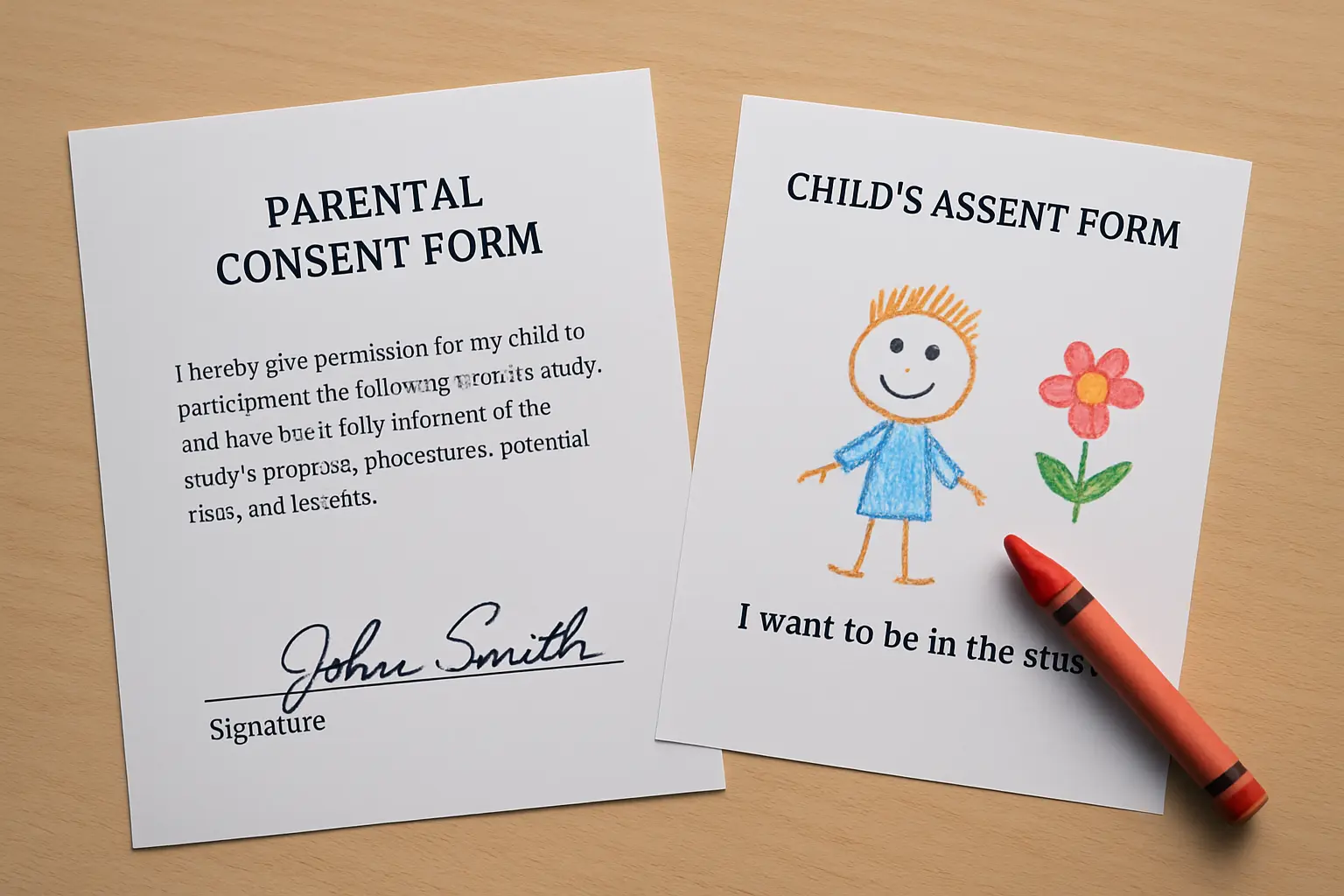
- A consent statement ready for adult respondents, and a separate parental consent plus child-assent form if any respondent is under 18.
- A named contact and a rough timeframe you can actually deliver, not an optimistic one.
- A backup school or two in case the first request is refused or delayed.
Does the instrument itself need separate validation or approval?
Ethics approval and instrument validation are two different steps that Nigerian undergraduate projects sometimes conflate. Ethics approval is permission to collect data from named participants at a named site; instrument validation is evidence your questionnaire or test actually measures what it claims to. If you are using a named validated instrument rather than building your own, the site’s guide to validated instruments for an education final year project covers instrument choice separately from the access-and-consent process this article covers — you generally need both steps done, not one instead of the other. If your study also needs published statistics on enrolment, attendance or examination outcomes to justify your background of the study, the site’s guide to where education students in Nigeria find project data covers UBEC, NERDC and WAEC as separate, publicly available sources that need no site-level permission at all.
What if your topic itself needs the permission, not just the site?
Some education topics carry a permission requirement baked into the topic itself, independent of which school you study — a project on corporal punishment, special-needs provision, or examination malpractice, for instance, is more likely to need a State Ministry’s specific sign-off than a project on lesson-planning practice. The site’s forty education project topics with their research questions flags which of its listed topics carry this kind of extra permission requirement alongside the standard school-access letter — worth checking before you finalise a topic, not after your proposal is approved.
Where Tesify fits
Tesify can draft the introduction-letter template and the consent-statement wording described above from your study’s specific details — your institution, your topic, whether minors are involved — which you then take to your supervisor and the relevant school or authority for their own sign-off; Tesify cannot obtain the permission itself, only help you write the request correctly the first time. Start with Tesify’s free plan to draft your introduction letter and consent form together.
Frequently Asked Questions
Do you need ethics approval to survey your own classmates or fellow students?
Usually a lighter process than school-based data collection — most departments still expect basic informed consent and confidentiality, but accessing your own institution’s students rarely needs the same multi-layer permission chain as entering an external school.
Can you name the school in your final project report?
Only if the school has separately consented to be identified — the safer default most Nigerian departments expect is to refer to “a public secondary school in [LGA/state]” rather than the school’s actual name, unless your consent form specifically covers identification.
What happens if a school refuses your request?
Have a second and third school lined up before you approach the first one, and build in time for a refusal or a slow reply into your project timeline — a single school’s refusal should not be allowed to delay your defence date if you planned for alternatives from the start.
Do online or WhatsApp-distributed teacher questionnaires still need school permission?
Usually yes, if you are reaching teachers through an official school or association channel; a personal WhatsApp group of teachers you already know informally still needs individual informed consent even without formal school-level sign-off.
What is the difference between a parent’s consent and a child’s assent?
Consent is the legal permission a parent or guardian gives for their child to take part; assent is the child’s own age-appropriate agreement, explained in language they can understand, and a child who visibly does not want to participate should not be included even where a parent has already consented on their behalf.
Is a postgraduate education thesis held to a stricter ethics standard than an undergraduate project?
Generally yes — postgraduate research is more likely to be routed through a formal institutional research ethics committee, especially where the study involves staff performance data, disciplinary information, or a vulnerable population, so check your postgraduate school’s specific requirement rather than assuming the undergraduate process applies.
How long does school-level permission typically take?
This varies by state and by school, and Nigerian education authorities do not publish a standard turnaround time — build several weeks of buffer into your data-collection timeline rather than assuming a same-week response.