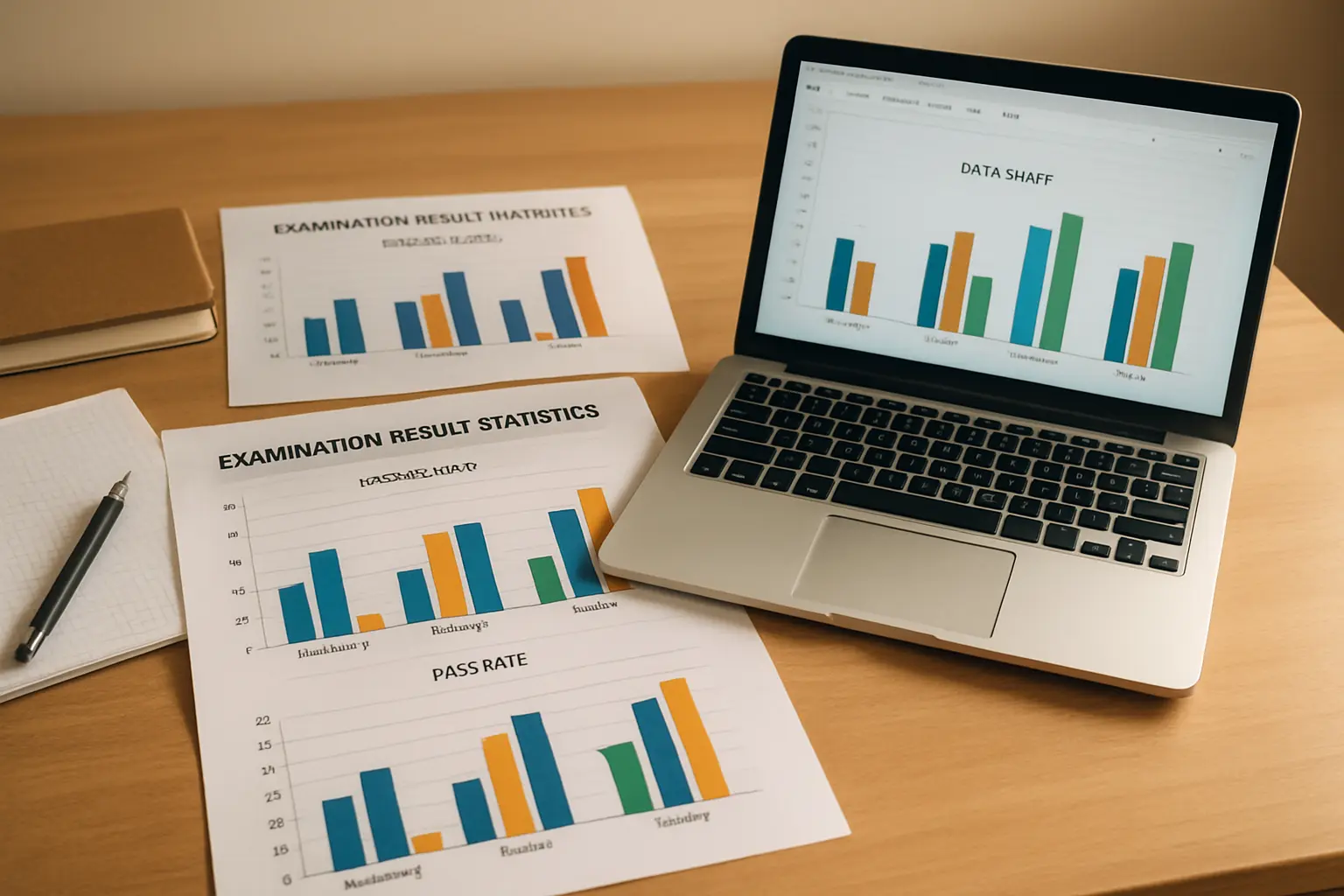
An education final year project’s external data source in Nigeria depends on the school level and question it studies: basic education enrolment and infrastructure data runs through the Universal Basic Education Commission (UBEC), secondary school examination performance data runs through WAEC and NECO, curriculum design questions run through the Nigerian Educational Research and Development Council (NERDC), and most of a classroom-level project’s actual data — test scores, teacher or student questionnaires, lesson observations — still comes from your own data collection, not a national dataset.
| Source | Level / focus | What it holds | Access |
|---|---|---|---|
| Universal Basic Education Commission (UBEC) | Basic education (primary and junior secondary) | Enrolment, school infrastructure and basic education intervention data | Free, published reports and the UBEC website |
| West African Examinations Council (WAEC) | Senior secondary examinations | WASSCE result statistics and subject performance patterns | Free summary statistics; detailed data may require a formal request |
| National Examinations Council (NECO) | Senior secondary examinations | SSCE result statistics, an alternative examination body to WAEC | Free summary statistics; detailed data may require a formal request |
| Nigerian Educational Research and Development Council (NERDC) | Curriculum | The national curriculum documents, subject content and structure by level | Free curriculum documents published by NERDC |
| Federal Ministry of Education / State Ministries | Policy and administration | Education sector policy documents, state-level education statistics where published | Varies by state; some published, some requested |
| UNESCO Institute for Statistics (UIS) | Cross-country comparison | Internationally standardised education indicators for Nigeria alongside other countries | Free via the UIS open data portal |
Why does the source depend so heavily on school level?
Nigeria’s education data landscape is organised the way its administration is organised — basic education is UBEC’s statutory mandate, examinations sit with WAEC and NECO as separate bodies from the ministries, and curriculum design is NERDC’s specific remit — so a project studying, say, junior secondary infrastructure needs UBEC, while a project studying WASSCE performance patterns needs WAEC or NECO, and the two agencies do not hold each other’s data. Confirm which level and question your project actually asks before searching, because “education data Nigeria” as a search term returns results from all of these bodies mixed together, and sorting them by relevance afterward wastes time a level-specific search avoids, especially in the first week of your project when momentum matters most.
What does UBEC data cover, and who needs it?
UBEC’s remit covers primary and junior secondary education, and its published data and reports touch enrolment figures, school infrastructure interventions, and the Universal Basic Education programme’s implementation across states — figures worth checking against the broader national enrolment picture once a project moves from basic to tertiary comparisons. A project on primary school infrastructure, out-of-school children, or basic education access is the natural fit for UBEC data as background and context in Chapter One, though the specific school-level data your project analyses — attendance, performance, teacher qualifications at your study site — will still come from your own data collection at the schools you actually study, with UBEC data providing the national or state-level context that situates your findings.
How do WAEC and NECO data differ, and when do you need each?
WAEC and NECO are both examination bodies administering senior secondary school-leaving examinations in Nigeria — WASSCE and SSCE respectively — and either can supply subject-level pass-rate patterns useful for a project on examination performance, subject choice, or gender gaps in specific subjects. Neither body publishes individual student results for research use; a project needing individual-level examination scores has to obtain them through the school being studied (with appropriate permission) rather than from WAEC or NECO directly, which publish only aggregate statistics. State clearly in Chapter Three which examination body’s data you are using and for which years, since the two bodies’ published statistics are not always presented in comparable formats across time.
What does NERDC data cover, and how do you use it in a curriculum-focused project?
NERDC develops and publishes Nigeria’s national curriculum documents by subject and level, which are the primary source for any project analysing curriculum content, subject sequencing, or how well a school’s teaching matches the stated national curriculum. A project comparing what is taught against what the curriculum specifies, or evaluating a curriculum’s coverage of a particular topic (say, financial literacy or digital skills content), should cite the specific NERDC curriculum document and its publication or revision year, since curriculum documents are periodically revised and an outdated version cited as current is a factual error a panel will catch if they know the current document. This comparison — stated curriculum against observed classroom practice — is also a natural fit for the theoretical framework a curriculum-implementation study builds around, since the gap between policy and practice is itself a well-established line of educational theory worth naming explicitly in Chapter Two.

When should you use UNESCO Institute for Statistics data instead of a Nigerian source?
UIS is useful specifically when your project needs a Nigeria figure alongside other countries’ figures on the same standardised indicator — literacy rate, pupil-teacher ratio, gross enrolment ratio — because UIS applies a consistent international definition across countries, which a purely Nigerian source does not guarantee when compared against another country’s own national statistics body. For a Nigeria-only project with no cross-country comparison, a Nigerian source (UBEC, NBS, or the relevant ministry) is usually more current and more granular than the UIS figure for the same indicator, so reserve UIS for the specific case where comparability across countries is genuinely the point of the analysis.
How does this connect to your instrument choice?
If your project pairs a national data source with your own classroom instrument — say, UBEC infrastructure data alongside a validated teacher self-efficacy instrument you administer yourself — keep the two data types visibly separate in Chapter Three: national or agency data has its own citation and year, and your instrument’s data has its own methodology description, sample, and reliability figure. Blending the two into one undifferentiated results section makes it harder for a panel to see which findings are yours and which are cited context.
What should a data-sources paragraph in your research proposal look like?
A strong proposal names the sources before data collection begins, not after: “This study will draw on UBEC’s most recent basic education statistics report for state-level enrolment context, supplemented by a researcher-administered questionnaire distributed to 200 junior secondary teachers across three local government areas, with WAEC’s published subject pass-rate statistics for the same period used to contextualise findings on subject-level performance.” Writing this paragraph early — before the literature review is finished — also surfaces access problems early: if a specific report turns out to be unavailable or a school will not grant access, you find out in time to adjust scope rather than discovering it during data collection week, which is exactly the point in a project’s timeline where a late surprise is hardest to absorb and most costly to recover from.
How should you cite these sources in Chapter One and Chapter Three?
Name the specific report and year, not the agency alone: “according to UBEC’s [specific report name], [year]” is citable; “according to UBEC” is not, because these agencies publish multiple reports across different years. For WAEC or NECO statistics, state the examination year and subject explicitly, since pass rates vary meaningfully by year and by subject and an unqualified “WAEC results show” claim invites a panel to ask which year and which subject. Where your project’s actual data comes from your own instrument rather than any of these sources, say so plainly in Chapter Three rather than implying a national dataset backs figures that are, in fact, your own primary data.
Frequently asked questions
Can I get school-level or state-level breakdowns from UBEC, or only national figures?
UBEC publishes data at multiple levels including state breakdowns in many of its reports, though the granularity available varies by report and year — check the specific publication for the level of detail your project needs rather than assuming a national aggregate is the only option.
Do I need permission to use published WAEC or NECO statistics in my project?
Published aggregate statistics are generally citable as a public source without separate permission, the same as citing any published report; a formal request is only needed if you want data beyond what is already publicly published.
Is NERDC’s curriculum document the same as what my study’s school actually teaches?
Not necessarily — the NERDC document is the national standard, but implementation varies by school, which is exactly the kind of gap a curriculum-implementation project can investigate. State this distinction explicitly in your problem statement if your project’s angle is the gap between curriculum and classroom practice.
Which source should I use for out-of-school children statistics?
UBEC and UNICEF both publish figures on out-of-school children in Nigeria, sometimes with different methodologies and figures; cite whichever source you use explicitly by name and year, and note in your literature review if the two sources diverge, rather than presenting one figure as an uncontested consensus.
Can I combine UBEC data with my own classroom-level survey in one project?
Yes — this is a common and strong design: UBEC or ministry data situates your Chapter One background at the state or national level, while your own instrument collects the school- or classroom-level data your specific research questions actually analyse.
How current is the data these agencies publish?
It varies by agency and report type; some publish annually, others less frequently. Always check and state the publication year of the specific figure you cite rather than assuming it reflects the current academic session.
Does a tertiary-level education project (university or polytechnic) use the same sources as a basic or secondary study?
Partly — UBEC and WAEC/NECO focus on basic and secondary levels, so a tertiary-level project instead draws more on NUC (for universities) or NBTE (for polytechnics), JAMB for admission-related questions, and the specific institution’s own records for programme-level data.
What should I do if a report I planned to cite is unavailable by the time I submit?
Cite the most recent version you were able to access, note its publication year explicitly, and flag in your limitations section that a more recent edition may exist but was not accessible at the time of writing — this is a defensible, honest way to handle a moving data source.
Tesify’s Chapter One and Chapter Three source tables keep your national-level context data and your own classroom-level data clearly separated and dated, so a panel can see exactly which numbers are cited and which are yours. Start on the free plan to organise your education project’s data sources.