
The National Bureau of Statistics’ Q1 2026 GDP figures state that the construction sector contributed 4.85% of Nigeria’s real GDP in the first quarter of 2026, up from 4.74% in the same quarter of 2025. Construction covers building and development activity; real estate services is reported as a separate activity in NBS GDP tables, so be clear which of the two you are citing. Either way, that single national figure is useful background for your introduction, but it is not the data your estate management project actually needs. Property values, land registration records and mortgage-finance figures live in different places entirely, and treating a national sector figure as if it describes your specific study neighbourhood is one of the more common, and most easily avoided, errors in an estate management Chapter Three. Here is where each real source lives, what it actually holds, and which project designs it actually supports, before you spend weeks assuming a national statistic will substitute for local data.
Where Estate Management Students in Nigeria Can Find Real Data
| Source | What it holds | Best for |
|---|---|---|
| National Bureau of Statistics (NBS) | Quarterly GDP by sector, including construction and real estate, plus other sectoral indicators | National-level background context on the real estate/construction sector |
| State Land Bureau / Land Registry (e.g. Lagos State Lands Bureau) | Certificate of Occupancy records, land registration status, land allocation under the Land Use Act 1978 | Land titling, registration and land-use-conversion topics |
| Central Bank of Nigeria (CBN) | Banking-sector and credit statistics in its periodic reports and statistical publications | Housing-finance, mortgage-access and real-estate-investment topics |
| Federal Mortgage Bank of Nigeria (FMBN) | National Housing Fund mortgage products and scheme information | Affordable-housing and mortgage-access topics |
| Nigerian Institution of Estate Surveyors and Valuers (NIESV) | Professional guidance and practice documents for estate surveyors and valuers | Valuation-methodology and professional-practice topics |
| Primary data: your own property/rent survey or facility records | Actual sale prices, rental values, tenant/landlord responses, facility-management logs | Valuation, rental-market and facility-management topics — a very common estate management project design |
NBS: National Context, Not Property-Level Data
NBS publishes the construction sector’s GDP contribution and related sectoral indicators on a quarterly basis, which is useful national-context data for your introduction or background of the study, but it does not report property-level prices, rents or land values — the sector figure is macroeconomic, not a substitute for the property-market data your actual research questions need. Always cite the specific quarter and year of the NBS figures you use (for example, “Q1 2026 GDP report”), since the figure moves each quarter and a citation without a stated period is not verifiable.
State Land Bureaus and Registries: Titling and Land-Use Data
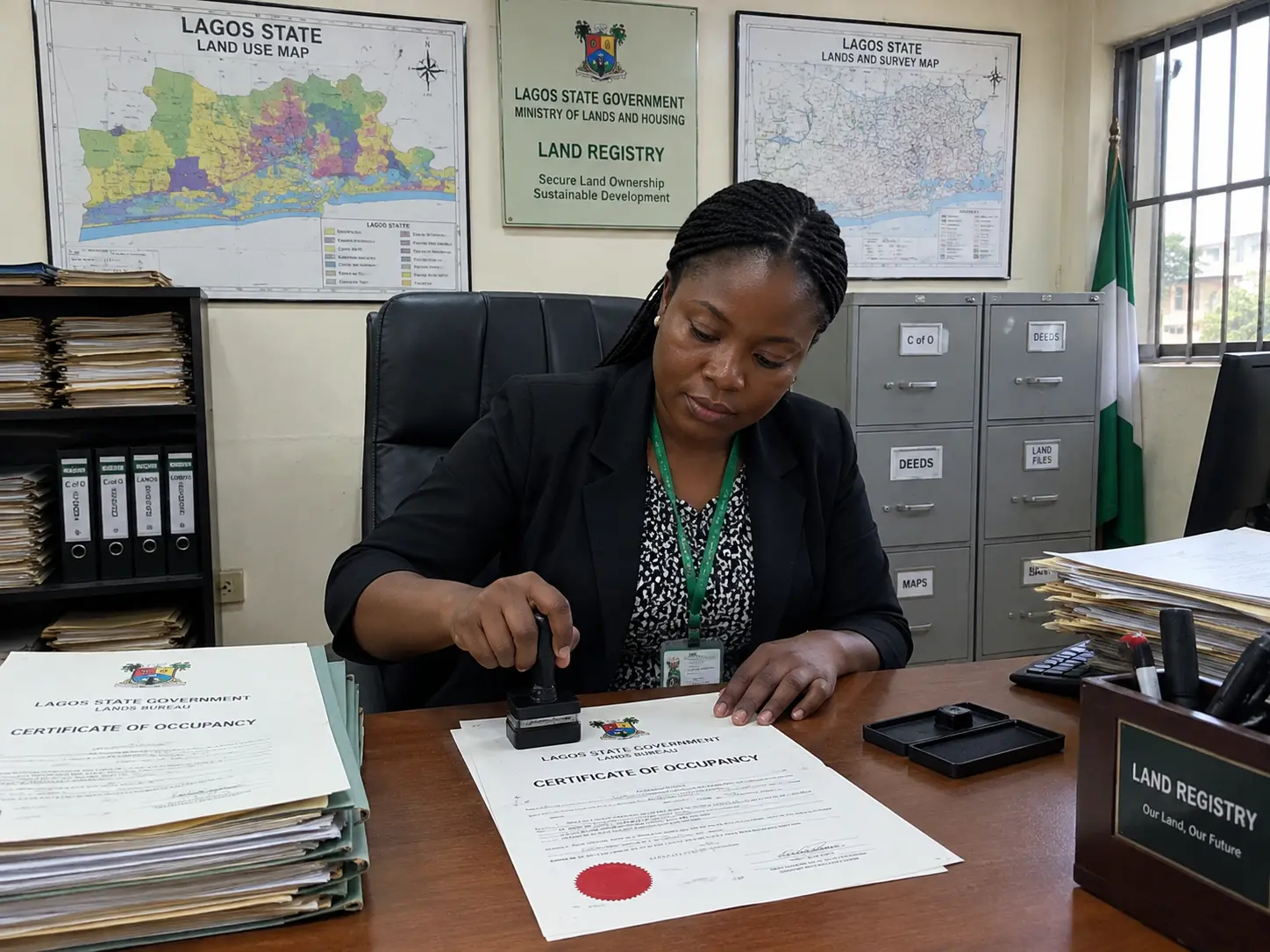
Land administration in Nigeria operates under the Land Use Act 1978, which vests land in government, with each state administering land within its territory through its own Land Bureau or Ministry of Lands — meaning your registration and titling data is state-specific, not a single national database. A project on land-titling delays, Certificate of Occupancy processing, or land-use conversion should name the specific state and land registry office your data comes from, since procedures and processing timelines are set at the state level and vary between states.
CBN: Banking and Housing-Finance Context
The Central Bank of Nigeria’s periodic reports and statistical publications carry banking-sector and credit statistics that can provide context for projects examining housing-finance access, mortgage default risk, or banks’ lending to property. Cite only the specific report edition and table you have actually opened, with its reporting period, since these figures are updated on a regular publishing schedule. Note also that national banking figures describe the sector as a whole rather than conditions in any one city or property type — treat them as macro-financial context for your discussion, not as a direct measure of your study area’s housing-finance conditions.
FMBN and NIESV: Scheme Data and Professional Standards
The Federal Mortgage Bank of Nigeria finances affordable housing through the National Housing Fund (NHF), which makes it relevant to affordable-housing-access topics — cite the specific scheme, document and reporting period you use rather than referring to FMBN data as a single undifferentiated pool of statistics. The Nigerian Institution of Estate Surveyors and Valuers is the professional body for the field, and any valuation or practice guidance it publishes is the natural citation for a project examining valuation methodology or professional practice — cite the specific document you opened, not just “NIESV standards” generically.
Your Own Property or Rent Survey: A Very Common Design
Many Nigerian estate management final year projects are built on primary data — a survey of actual sale prices or rents in a named neighbourhood, a facility-management audit of a named property, or a questionnaire to tenants, landlords or estate agents — rather than on any of the national sources above. This design needs a clearly stated sampling frame (how properties or respondents were selected), the exact period the data covers, and, if you are collecting data from tenants or landlords directly, a stated approach to verifying self-reported rent or price figures against a second source where possible, since self-reported property values can be imprecise.
How Do You Write the Chapter Three Data-Source Paragraph?
Whichever sources your project draws on, Chapter Three needs one paragraph stating exactly where your data came from: the named source (a specific land registry office, a named neighbourhood survey, a specific NBS or CBN report edition), the exact period covered, how you accessed it, and any properties or respondents excluded from your final sample and why. A paragraph that says only “data was obtained from the study area” fails every one of these tests and is a common reason an estate management Chapter Three is sent back before the panel even reaches your Chapter Four analysis.
A Worked Example: Sourcing Data for a Rental-Market Study (Illustrative)
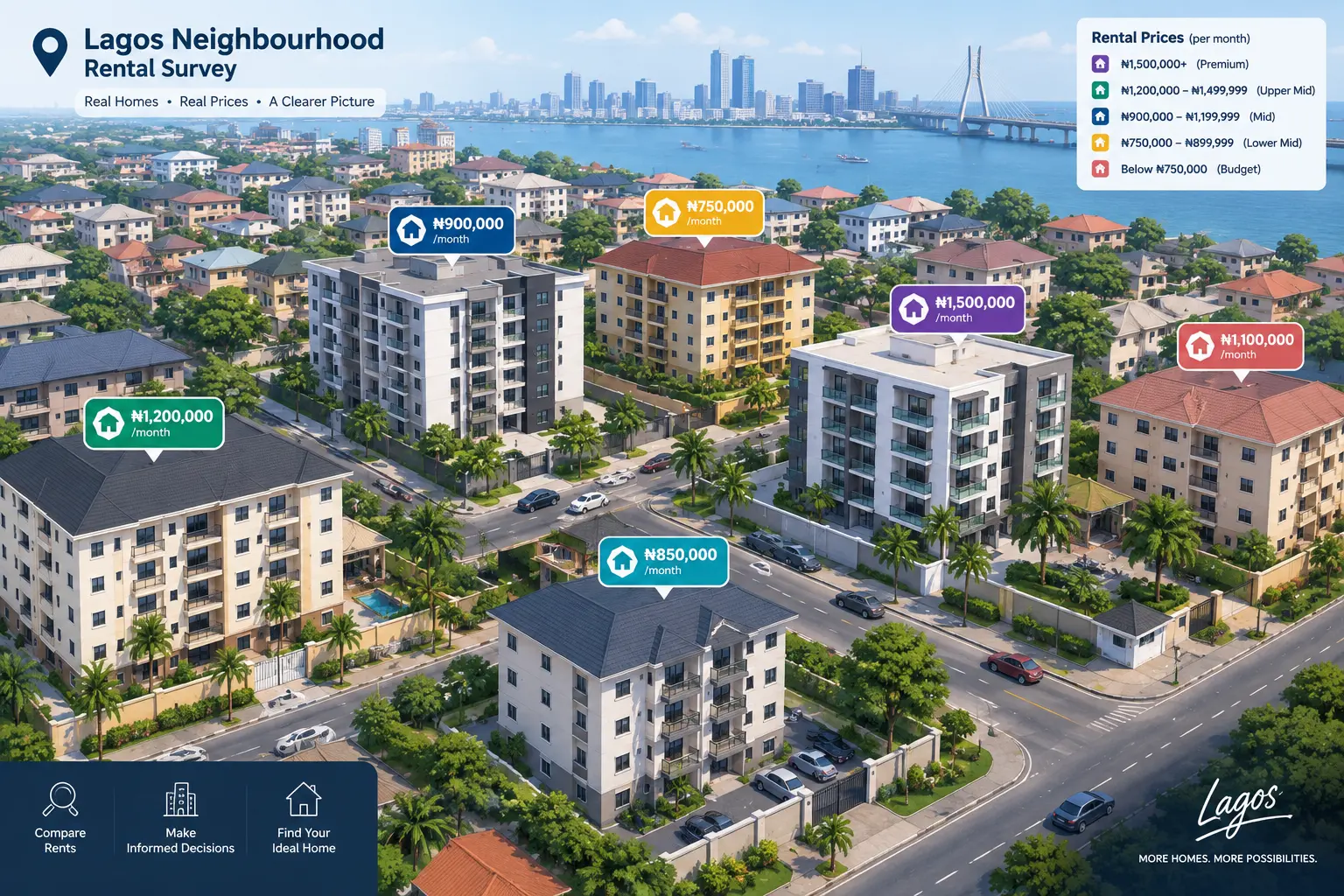
The figures below are entirely fictitious and illustrative — built to show the shape of a defensible data-source paragraph, not to be copied as real findings.
Data-source paragraph (illustrative): “This study surveyed 80 two-bedroom rental properties in Yaba, Lagos, listed or let between January and June 2026, drawn from a combination of a structured landlord/agent questionnaire (62 responses) and verified estate-agent listings (18 properties where the landlord could not be reached). Six properties under active litigation or with incomplete lease records were excluded, leaving a final analysed sample of 74 properties. National construction-sector context is drawn from the NBS Q1 2026 GDP report; no NBS figure is treated as neighbourhood-specific data.”
Notice what this paragraph does that a vague one does not: it names the exact neighbourhood, the exact period, the two data-collection methods used and how many properties each contributed, the exclusion criteria and the resulting final sample size, and it explicitly separates the national background statistic from the local findings data. Every estate management Chapter Three should be able to make the same five moves.
Common Faults With Estate Management Data-Source Sections
| Fault | Fix |
|---|---|
| Citing a national NBS figure as if it describes your specific study neighbourhood | Use national figures only as background context; your findings section needs your own local data |
| Treating land registration procedure as identical across all Nigerian states | Name the specific state and land bureau your registration data or procedure description comes from |
| Presenting self-reported rent or price figures as verified market data | State explicitly that figures are self-reported and, where possible, cross-check against a second source (an estate agent listing, a comparable sale) |
| Citing “CBN data” or “NIESV standards” with no specific report or document named | Name the specific report edition, reporting period or standard document you actually opened |
Which Source Fits Which Common Estate Management Project Type?
| Project type | Primary data source |
|---|---|
| Property valuation study | Your own comparable-sales survey, referencing the professional valuation guidance you cite |
| Land titling / Certificate of Occupancy processing study | The named state Land Bureau/Registry |
| Housing-finance or mortgage-access study | CBN reports and FMBN National Housing Fund information, alongside your own survey |
| Rental-market or housing-affordability study | Your own rent survey, with NBS sector data as national context |
| Facility-management study | The named property’s own facility-management records |
Frequently Asked Questions
Is the construction sector’s GDP contribution the same as the real estate sector’s contribution?
No — Nigeria’s national accounts report construction and real estate services as related but distinct activities, so confirm which specific sector figure you are citing and do not use the two terms interchangeably in your text.
Do land registration procedures work the same way in every Nigerian state?
No — the Land Use Act 1978 sets the national framework, but each state administers its own Land Bureau or Ministry of Lands, so processing steps, fees and timelines can differ meaningfully between states; always describe the specific state’s procedure your project examines.
Can I use estate agents’ online listings as a data source for property prices?
Yes, as a supplementary source, but state clearly that listed asking prices may differ from actual transaction prices, and where possible corroborate listings against another source such as a completed-sale record or a direct survey.
Do I need ethics approval to survey tenants or landlords for my project?
Requirements vary by department, but most institutions still expect informed consent from survey respondents and confirmation of how their responses will be kept confidential — check your department’s specific requirement before starting data collection.
How current does my property-price data need to be?
Property markets move, so recent primary data is far more defensible than older listings or previously published price data; confirm with your supervisor how recent your department expects it to be.
Where do I find the current Land Use Act text if I need to cite it directly?
The Land Use Act 1978 is a federal statute available through Nigeria’s official law repositories; cite the specific section number relevant to your point rather than referencing the Act generically.
Can I combine data from more than one state if my topic is comparative?
Yes, provided you are explicit that land administration procedures are state-specific and you describe each state’s process separately rather than presenting a blended, generic procedure that does not accurately describe either state.
Is a sample of under 100 properties too small for a rental-market study?
There is no fixed national minimum, but your sample size should be justified against your chosen sampling method and analysis plan in Chapter Three, and any resulting precision limitation should be acknowledged honestly in your limitations section rather than left unaddressed.
Should I convert older property price data to current values before comparing across years?
If your project compares prices across time, note explicitly whether your figures are adjusted for inflation or presented in nominal terms, since the two give different pictures of real price change and a panel will ask which one you used.
Turning scattered land, price and finance data into a clean Chapter Three source paragraph — and a Chapter Four that follows from it — is the kind of structured chapter work Tesify is built to support. More than 9,000 students have used Tesify to write over 15,000 chapters, and every one is 100% written by you: your data, your analysis and your conclusions remain your own. Start your project with Tesify and turn your data sources into a finished chapter.
If your final year project also needs an internship-to-project pathway, see how to turn a SIWES report into an estate management project. For data sources in adjacent fields, see where engineering project students and where economics project students in Nigeria find their data, and if your project needs spatial mapping of land parcels, compare GIS tools built for exactly that. For the generic mechanics of your methodology chapter, see how to write Chapter Three of a final year project.