
This is a complete, annotated worked example of a Nigerian mechanical engineering final year project built around one illustrative topic — the design, fabrication and performance evaluation of a small-scale manually assisted groundnut oil expeller — chosen because design-and-fabricate projects are the most common project type in Nigerian mechanical engineering departments. Every figure below is invented for illustration; treat the structure and the design-calculation method as the template, and put your own machine’s real numbers in.
Chapter One: Introduction — what it needs and why
Chapter One opens with the background of the study: groundnut processing in Nigeria is still dominated by manual and semi-mechanised extraction methods that are slow and give a low oil-yield percentage, and small-scale processors cannot afford imported industrial expellers. The problem statement follows directly from this gap — existing low-cost options either extract too little oil or are too complex for a rural workshop to fabricate and repair locally. The aim is one sentence (“to design, fabricate and evaluate the performance of a low-cost, manually assisted groundnut oil expeller”); the objectives break it into three to five measurable steps (design the machine’s components, fabricate a working prototype, and evaluate its oil-yield efficiency and throughput against a set target). Scope states clearly what the project does not cover — for example, that the prototype is sized for small-scale use, not industrial capacity, and that only groundnut is tested, not other oilseeds.
What makes this section pass a panel: objectives that are individually testable in Chapter Four, not vague verbs like “study” or “examine” — a mechanical engineering objective should read as something you can point to a number for afterward.
Chapter Two: Literature Review — the theory and existing designs a panel expects
A mechanical engineering literature review for a design-and-fabricate project has two halves. The first is the underlying engineering theory your design draws on — for an expeller, this means the mechanics of screw-press expression (how a tapering screw shaft increases pressure along its length to rupture oil cells), basic machine-design principles for the shaft, bearings and frame (stress, torque and factor of safety), and material-selection theory (why mild steel is chosen over a softer alloy for a load-bearing shaft). The second half reviews existing designs — manual ram presses, motorised screw expellers, hydraulic presses — compared on cost, oil yield, throughput and maintainability, ending with the gap your design closes. Cite the standard machine-design references your department uses (Khurmi and Gupta’s Machine Design and Shigley’s Mechanical Engineering Design are the two most commonly cited textbooks for shaft, bearing and fastener calculations in Nigerian mechanical engineering departments) rather than inventing a formula without a source.
What makes this section pass a panel: every design decision in Chapter Three traceable back to a principle or a comparison made here — a panel checks whether Chapter Three’s choices were justified in Chapter Two, not assumed.
Chapter Three: Methodology — materials, design calculations and fabrication process
This is the chapter a mechanical engineering panel reads most carefully, because it is where the actual engineering happens. Structure it in three parts.
Materials selection: list every major component (mild steel shaft, cast-iron barrel/cage, bearings, pulley, frame) with the specific grade or specification chosen and a one-line justification — for example, mild steel (specify a grade such as AISI 1030 as an illustrative choice) selected for the shaft for its combination of strength, machinability and local availability compared with a higher alloy steel that would cost more without a corresponding benefit for this duty cycle.
Design calculations (illustrative, put your own figures in): a mechanical engineering Chapter Three needs worked calculations, not just a components list. A shaft-design calculation, illustrative only, might read: for an assumed motor power of P = 1.5 kW at a shaft speed of N = 100 rpm, torque T = (60 × P) / (2πN) ≈ 143 N·m; applying a design factor of safety of 3 against the mild steel’s yield strength gives a minimum shaft diameter from the standard torsion equation. Show the full substitution, not just the final number, and state every assumption (motor power, speed, factor of safety) explicitly as an assumption — a panel will ask where an unstated number came from.
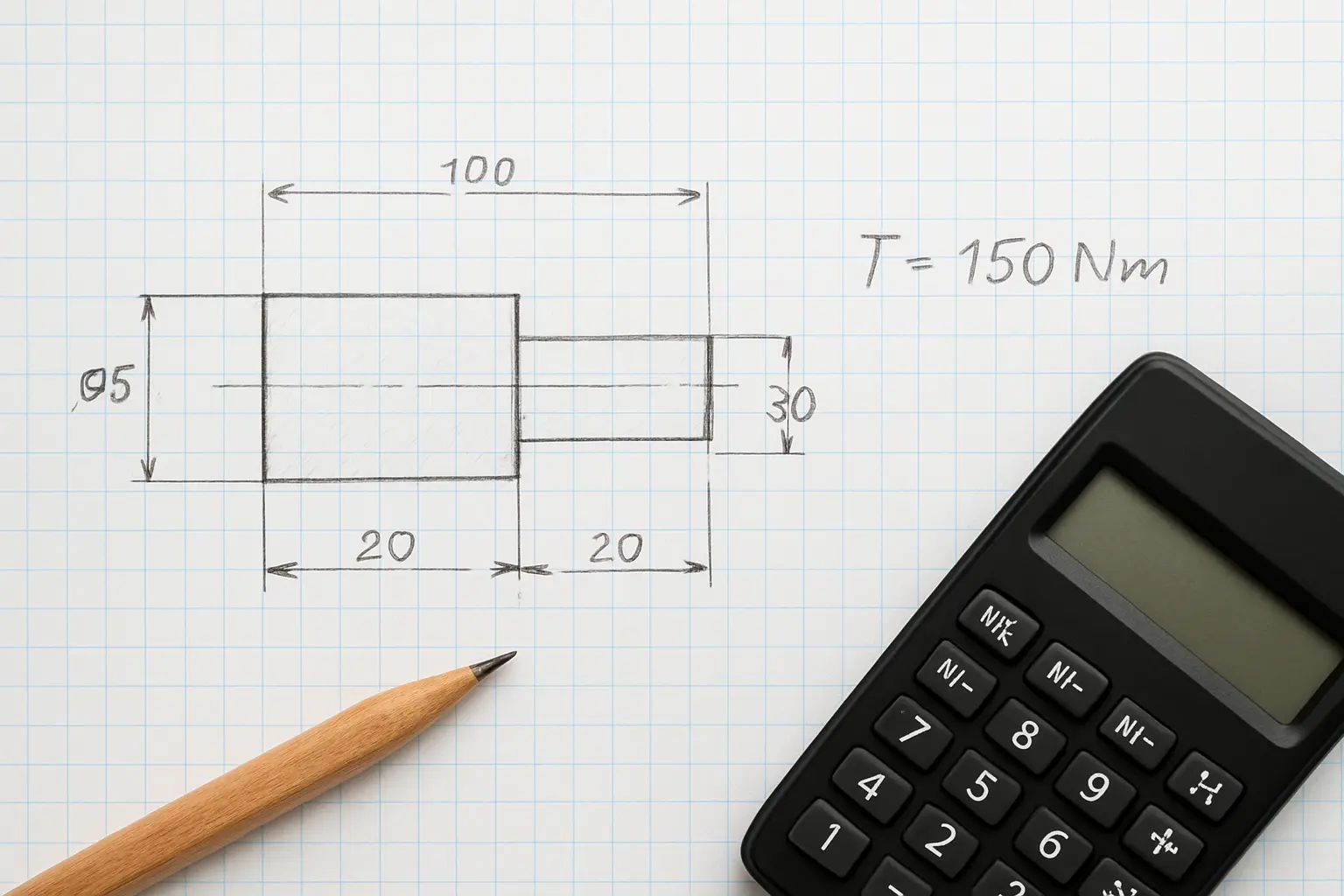
Fabrication process: describe the actual workshop steps in the order performed — cutting and turning the shaft on a lathe, fabricating the barrel/cage by welding and machining, drilling and aligning bearing housings, assembling the frame, and fitting the power transmission (belt and pulley, or a hand-crank mechanism for a fully manual version). Include the tools and machines used (lathe, welding set, drill press, grinder) since a panel will ask what was actually done in the workshop versus what was drawn.
Simulation or CAD software — SolidWorks, AutoCAD, ANSYS or Fusion 360 are the tools most Nigerian mechanical engineering departments expect a student to at least be familiar with for the design drawings, and student/education licences exist for several of these — check each vendor’s current student-licence terms directly, since terms and eligibility change, rather than assuming a specific price. For the fuller structure this chapter sits inside, see the site’s guide to writing Chapter Three of a Nigerian final year project, and where your project has no questionnaire at all — true of almost every design-and-fabricate mechanical engineering project — the civil engineering department’s guide to what goes in Chapter Four with no questionnaire answers the same structural question mechanical engineering students ask, from a sibling discipline that faces the identical problem.
What makes this section pass a panel: a full, substituted worked calculation for at least the critical component (usually the shaft or the highest-stressed part), not a components list with no numbers behind it.
Chapter Four: Results and Performance Evaluation
Chapter Four presents what the fabricated prototype actually did when tested, structured around the objectives stated in Chapter One. For the expeller example, this typically means a table of oil-yield percentage across several test runs with different feed rates or moisture contents, a throughput figure (kilograms of groundnut processed per hour), and a comparison against the target set in Chapter One or against a comparable existing design from Chapter Two.
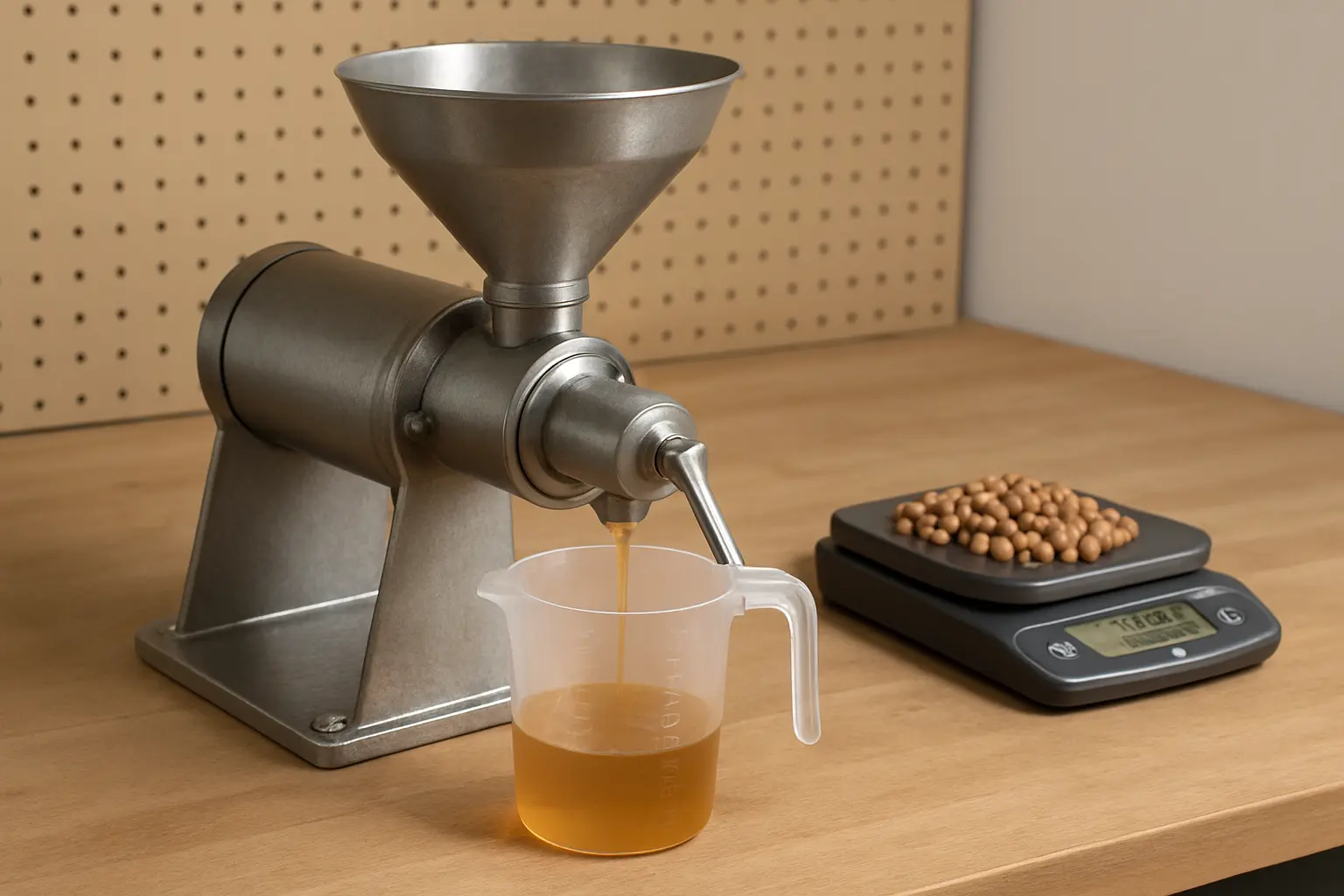
Present results as tables and one or two charts, then discuss what they mean — a table alone is not a discussion. If the prototype under-performed the target (a common and defensible outcome for a first prototype), say so plainly and discuss why, rather than describing a result the machine did not actually produce; over-claiming a fabricated machine’s numbers is the single fastest way to lose credibility with an examiner who can ask to see the prototype run.
What makes this section pass a panel: every number in Chapter Four traceable to the method described in Chapter Three (how was oil yield measured — by weighing extracted oil against total oilseed mass? state it), and an honest discussion of any result that fell short of target.
Chapter Five: Summary, Conclusion and Recommendations
Chapter Five closes with one paragraph per objective stating whether it was met, a conclusion on whether the overall aim was achieved, and recommendations split into two kinds — what a future student could improve on this specific design (a motorised version, a different bearing arrangement, a larger-capacity frame) and what the finding contributes more broadly (a low-cost expeller design pathway other small-scale processors could adapt). The site’s fuller guide to summary, conclusion, recommendations and contribution to knowledge covers the “contribution to knowledge” paragraph Nigerian panels examine hardest, which for a design-and-fabricate project is usually the design itself and the performance data generated, not a novel theory.
What makes this section pass a panel: a contribution to knowledge that is honest about scale — a working prototype and its performance data is a real, defensible contribution for an undergraduate project; do not claim it as an industrial solution it has not been tested to be.
Front matter and formatting
Title page, certification page, dedication and abstract follow your department’s own template — the site’s guide to project format in Nigeria: title page, certification, dedication and abstract covers the two most commonly referenced published guidelines and where they disagree, which matters for engineering departments in particular since margin, drawing-sheet and appendix conventions vary more between engineering faculties than between other departments.
How this compares to a nursing complete-example project, and to data sources for other engineering fields
The chapter-by-chapter logic is the same across fields — objectives drive Chapter Four’s structure, and Chapter Five closes objective by objective — but a mechanical engineering project’s Chapter Three is calculation- and fabrication-heavy where a clinical project’s is instrument- and ethics-heavy. The site’s complete nursing final year project example is worth reading alongside this one if you want to see how the same five-chapter skeleton adapts to a completely different kind of evidence. If your mechanical engineering project also needs secondary data — energy-sector statistics, standards bodies, material-property references — the site’s guide to where engineering students in Nigeria find project data covers the sources by discipline, including mechanical.
Where Tesify fits
Tesify can help you draft the prose around your own design calculations and test results — the introduction, literature review framing, and the discussion paragraphs that turn a results table into an argument — while the calculations themselves, the fabrication work, and the actual test data have to be yours, since they come from a machine you built and tested. Start with Tesify’s free plan to draft your Chapter One and Chapter Three prose around your own project’s specifics.
Frequently Asked Questions
Does every mechanical engineering final year project need to be a physical fabrication?
No — many departments accept a simulation-only or design-and-analysis project (for example, a finite-element stress analysis or a thermodynamic cycle simulation) without a physical prototype, but check your department’s specific requirement, since some explicitly require a built and tested component.
What if your fabricated prototype does not work as designed?
Document what happened honestly and discuss the likely engineering reason — a partial or failed result, properly analysed, is still a defensible Chapter Four; panels are more concerned by results that look too clean to be real than by an honestly reported shortfall.
Do you need to buy all materials yourself?
Most departments expect students to source and pay for fabrication materials, sometimes with a departmental workshop subsidy or shared machine access — confirm your department’s workshop policy and budget for materials early, since fabrication projects typically cost more than a questionnaire-based project.
Can you use a group-fabricated machine for an individual final year project?
Some departments allow a shared fabrication with individually written reports focused on different aspects (one student on design, another on performance testing) — check whether your department permits this before assuming it does, since plagiarism concerns apply to the written report even when the physical build was genuinely collaborative.
What software skills does a mechanical engineering panel expect?
Basic CAD drawing competence (SolidWorks, AutoCAD, Fusion 360 or a departmental equivalent) is expected for your design drawings; simulation software such as ANSYS is a bonus that strengthens Chapter Three but is not universally required for an undergraduate project.
How is a mechanical engineering project graded differently from a non-engineering project?
Expect the workshop or laboratory component (attendance, safety practice, and demonstrated understanding of the fabrication process) to carry separate marks alongside the written report and the oral defence — ask your department for its specific mark-allocation breakdown rather than assuming the written report alone determines your grade.