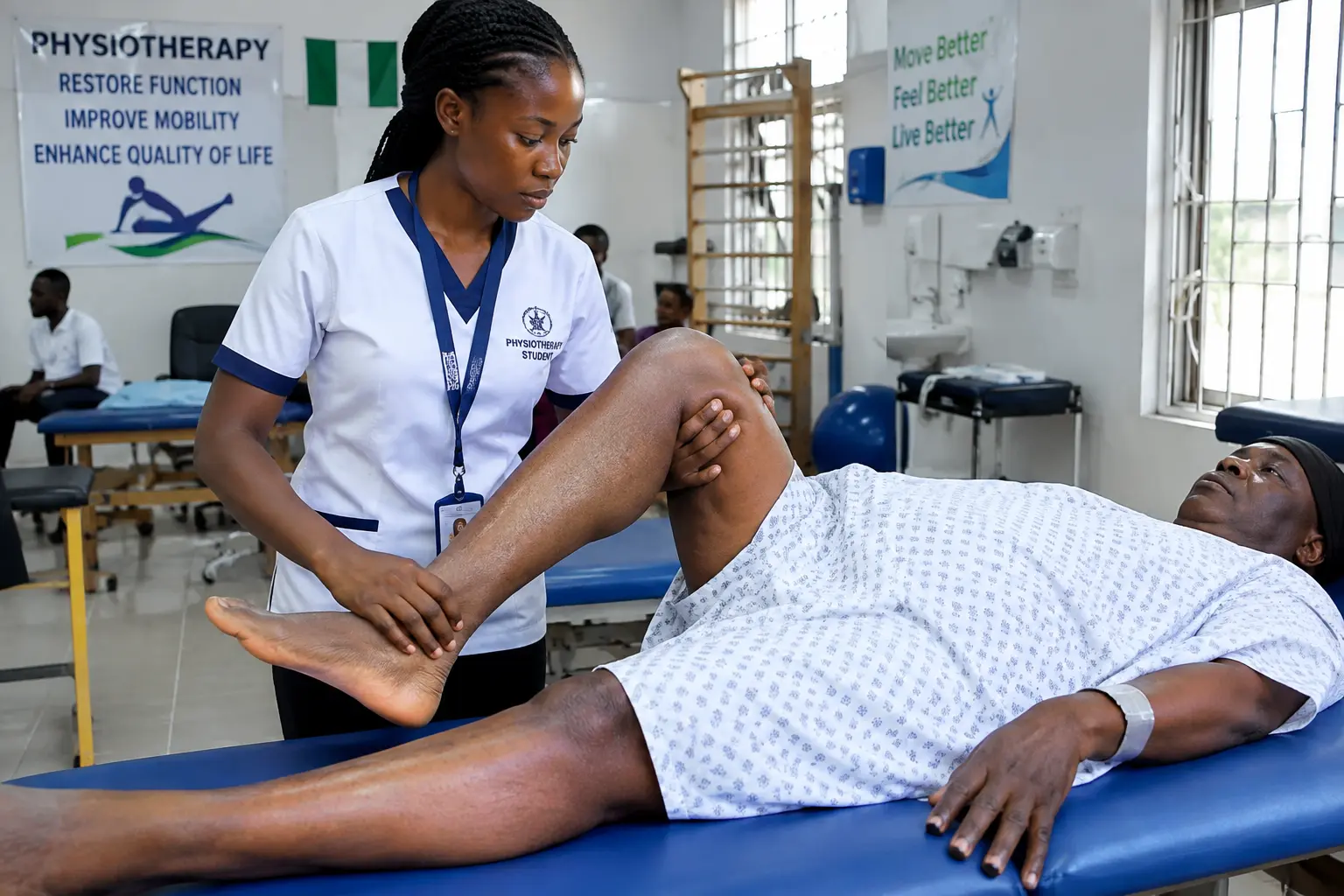
Your topic is approved, your defence date is fixed, and the hospital physiotherapy department you need has gone quiet on your access request. This is a common way a physiotherapy final year project in Nigeria stalls, and three separate gates — hospital access, ethics committee approval, and patient data rules — each need their own request, not one general letter hoping to cover everything at once.
Gate 1: Getting Hospital Access, Addressed to the Right Person
A letter of introduction sent to a hospital’s general administration usually stalls, because nobody there has the authority to approve a physiotherapy department’s time. Address your request specifically to the Head of the Physiotherapy Department or the Chief Physiotherapist, not the hospital’s general management, and attach your department’s letter of introduction behind a one-page request stating exactly what you need: how many patients or case files, what condition or intervention you are studying, how long each assessment or record review will take, and what the department receives back (a summary of your findings is the one line most likely to get a response). Public teaching hospitals typically have an established, if slow, research-clearance process; private hospitals and clinics often move faster once you reach the actual decision-maker, but may have no formal committee at all, which changes your ethics-approval route (see Gate 2). Nursing students face a similar access problem from the hospital side; our guide on what to do when a hospital case study goes quiet covers the escalation steps and the pivot options if a request stalls for weeks rather than days.
The Regulatory Context: MRTB and What It Does and Does Not Cover
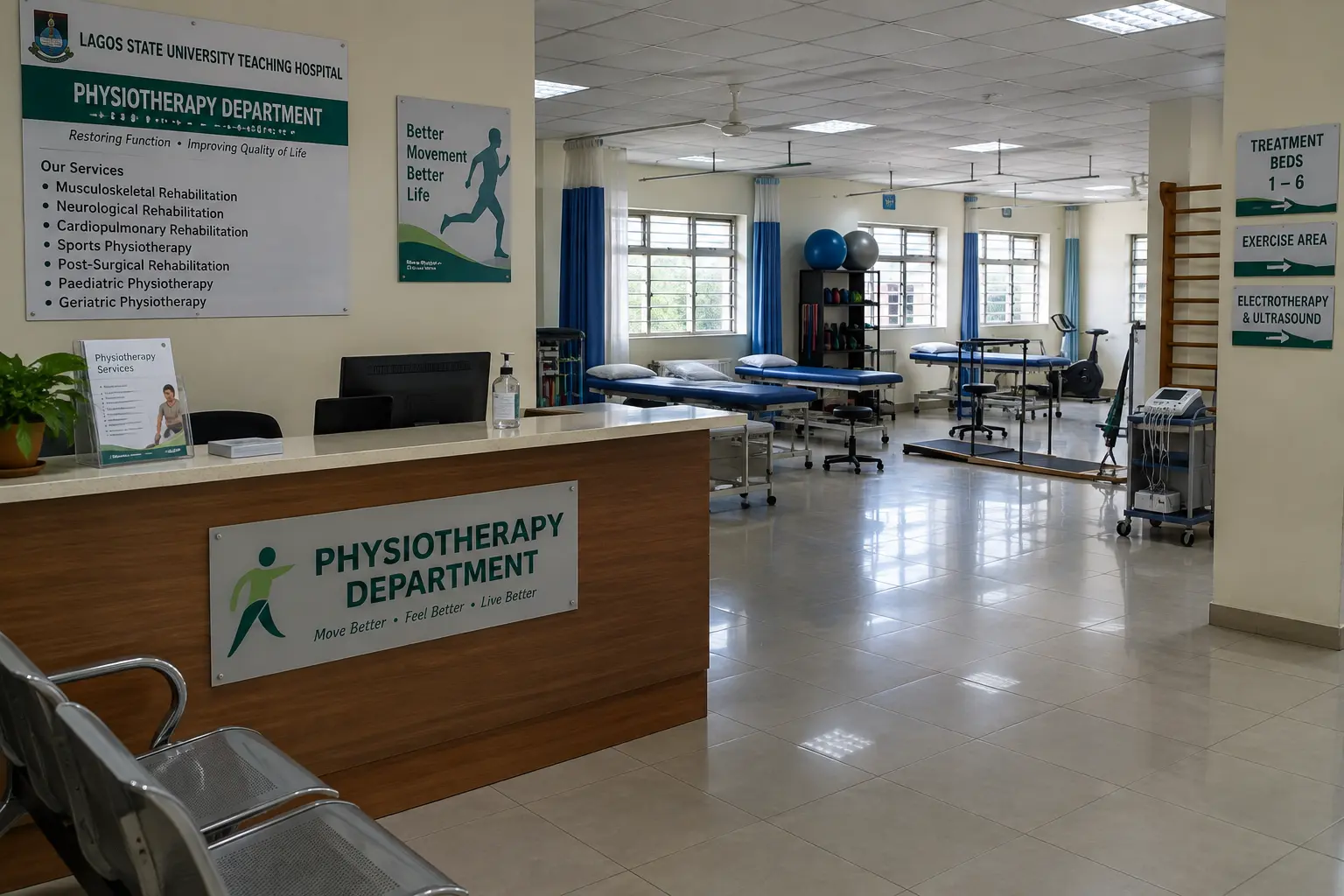
Read directly from the Medical Rehabilitation Therapists Board (MRTB) of Nigeria’s own site: the MRTB “licenses and regulates rehabilitation professionals across Nigeria — physiotherapy, occupational therapy, speech-language pathology, and allied disciplines,” describes itself as the “Federal health-sector regulator for rehabilitation professions in Nigeria,” and also “sets the academic and clinical curriculum standards that prepare students at accredited Nigerian universities for licensure and professional practice.” This is worth knowing precisely because of what it does and does not mean for your project access: the MRTB regulates the physiotherapy profession and its practitioners’ licensure, but it is not the body that approves your individual research access to a hospital or your project’s ethics clearance — those approvals come from the hospital itself and its HREC (or NHREC-registered equivalent), covered in Gate 2. Confusing MRTB’s regulatory role with a research-approval role is a mistake worth avoiding explicitly in your methodology chapter.
Gate 2: Ethics Approval Through an HREC Registered by NHREC
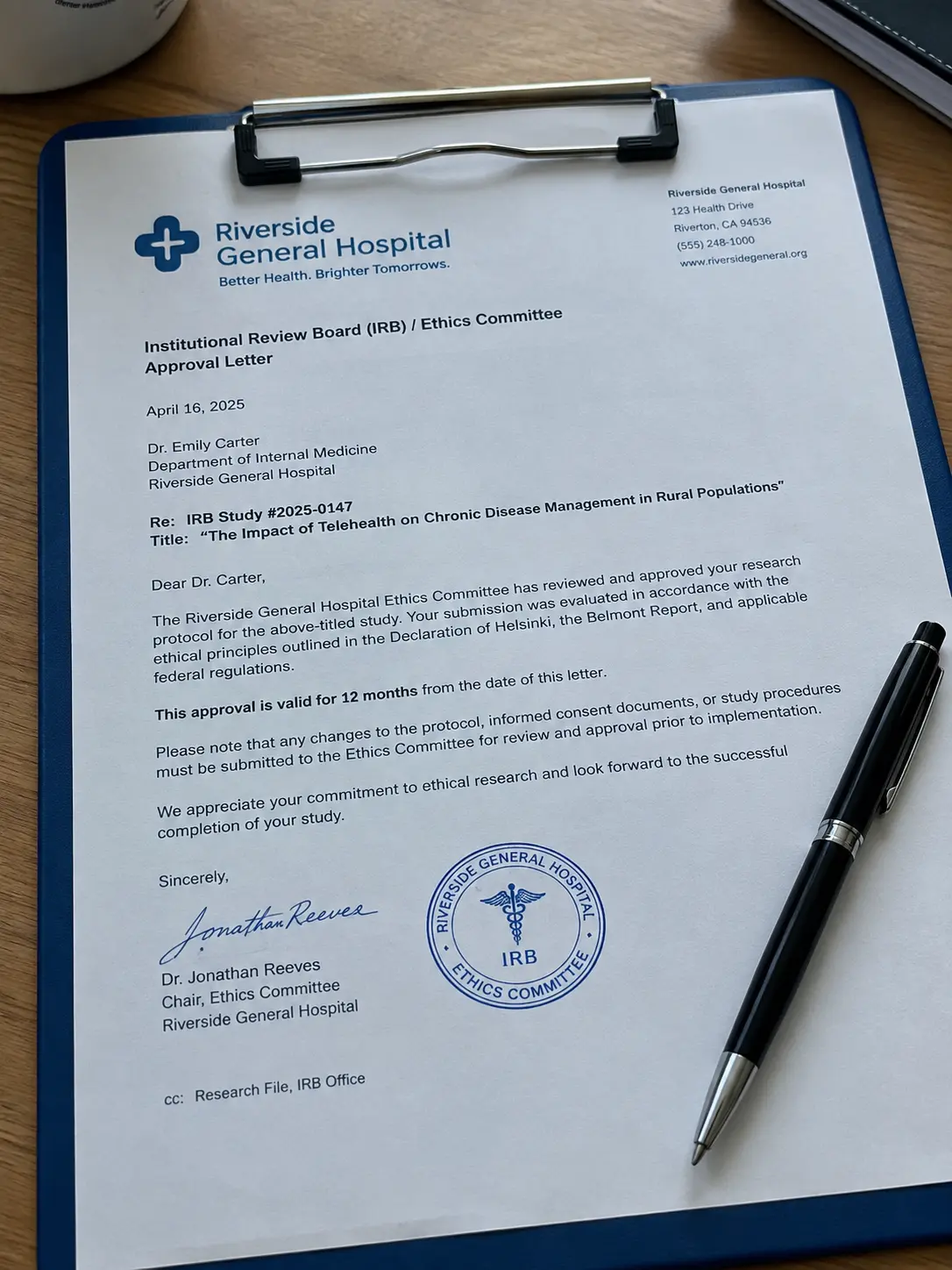
Any physiotherapy project involving patients, their records, or their treatment outcomes needs ethics approval from an institutional Health Research Ethics Committee (HREC) before you collect a single data point — this is not optional and a panel will ask for your approval letter at your defence. The National Health Research Ethics Committee (NHREC) was inaugurated in October 2005 and is tasked with the registration and auditing of Nigerian health research ethics committees, meaning the specific hospital-level HREC that approves your project should itself be one NHREC has registered. Most teaching hospitals and many larger general hospitals have their own HREC; where the hospital you are working with has none, ask your own university’s HREC whether it can approve a study conducted at an external site, which is a common arrangement rather than an obstacle. Our guide to ethics approval for a health-related project covers the general HREC application process in more detail, since the mechanics are similar across health disciplines even though the specific research content differs.
Gate 3: What the Nigeria Data Protection Act 2023 Requires for Patient Data
Patient records and any personal data you collect during your physiotherapy project — assessment scores, range-of-motion measurements tied to a named patient, demographic details — fall under the Nigeria Data Protection Act 2023 (NDPA), and your ethics approval does not replace this requirement, it sits alongside it. The Act sets out the principles of personal data processing in Section 24, the lawful bases for processing (of which consent is one) in Section 25, and the conditions for consent in Section 26; it treats health data as sensitive personal data in Section 30; it sets out the rights of a data subject in Sections 34 to 38 (including access, correction and erasure); and it sets out the obligations of the data controller in Section 29. In practice for a physiotherapy project, this means: collect only the data your research question actually needs, anonymise or code patient identifiers before analysis, store physical and digital records securely, and state in your consent form that patients can withdraw their data before you analyse it. Our comparison of Google Forms, KoboToolbox and paper for project data covers how these NDPA principles apply to whichever tool you choose for recording assessment data.
Where Access, Ethics and Data Rules Interact
These three gates are not independent paperwork exercises — each depends on the others. A hospital will generally not grant you access without seeing your HREC approval letter first, so obtain ethics approval before you finalise your access request, not after. Your HREC will generally not approve your protocol without a clear data-handling and consent plan, so draft your NDPA-compliant consent form before you submit for ethics review, not as an afterthought once approval is granted. Sequencing it this way — consent plan, then ethics approval, then hospital access request with the approval letter attached — is faster overall than working the gates in the wrong order and being sent back to redo an earlier step. Once your access is confirmed, our guide to physiotherapy research gap examples can help you sharpen the specific research problem your assessment data will answer.
A Worked Illustrative Access Request
The following is a labelled, illustrative example, not a real letter. Addressed to the Head of Physiotherapy at a named hospital: “I am a final-year physiotherapy student at my university, conducting an ethics-approved study on the management of chronic low back pain. I am requesting access to assess 40 outpatients who meet the study’s stated inclusion criteria over a six-week period, with each assessment taking approximately 20 minutes and scheduled around your department’s existing patient list. My university’s Health Research Ethics Committee approval (attached) confirms the study’s ethical clearance, and my consent process meets the requirements of the Nigeria Data Protection Act 2023. On completion, I will provide the department with a two-page summary of my findings.” This version works because it states a specific number, a specific time commitment, attaches the ethics approval rather than promising it later, and offers something back — all four are what turn a vague request into one a department head can approve without further back-and-forth.
What Access Actually Costs You in Physiotherapy Specifically
Physiotherapy projects often need something a general survey does not: physical access to patients for assessment (range of motion, functional scales, gait analysis), which is harder to arrange remotely than a questionnaire. Budget for the department’s own clinical schedule — physiotherapy departments run patient lists all day, and your data collection has to fit around, not interrupt, actual clinical care. Ask the department head directly what times are realistic for you to be present, and be prepared for your data-collection window to be narrower than your original plan assumed; building slack into your timeline from the start is more realistic than hoping the department will prioritise your project over its patients.
Working Around Equipment and Space Constraints
A hospital’s physiotherapy department has its own equipment and treatment-bay demands throughout the day, and a research assessment competing for the same space as a scheduled patient treatment is a common, avoidable friction point. Ask specifically whether a separate assessment room or a quieter time slot (early morning before the clinical list starts, or a designated research afternoon if the department has one) can be set aside for your data collection, rather than assuming you will be able to use whatever space is free at the moment you arrive. Departments that have hosted student researchers before often have an informal routine for this already; departments that have not may need you to propose the arrangement yourself, which is easier to do once your ethics approval and access letter are already in hand and the department head only has to agree on logistics rather than approve the project from scratch.
If Hospital Access Stalls Completely
Two switches usually keep a physiotherapy project moving if a specific hospital’s cooperation does not come through in time. First, a private clinic or sports physiotherapy setting: smaller, private-practice physiotherapy clinics or sports team clinics often have faster decision-making than a large public hospital, though they may have no formal ethics committee, which means routing ethics approval through your own university’s HREC becomes necessary. Second, a retrospective records-based design using only de-identified, already-collected clinical records (with the hospital’s and HREC’s permission to access them) rather than prospective patient assessment, which removes the scheduling conflict with live clinical care entirely. Either switch keeps your original research question largely intact; document the change and your reason for it in a short memo to your supervisor.
Once your access, ethics approval and consent plan are settled, Tesify keeps your Chapter Three methodology, your consent language and your data-handling statement consistent across every chapter as your draft grows. Start your physiotherapy project with Tesify — over 9,000 students and 15,000+ chapters written, 100% written by you.
Frequently asked questions
Do I need ethics approval for a physiotherapy project that only reviews existing records?
Yes. Reviewing existing patient records still involves personal health data and needs HREC approval, even though you are not directly assessing patients; the specific protocol and consent requirements may differ from prospective patient assessment, which your HREC will advise on.
What is the difference between NHREC and a hospital’s own HREC?
NHREC is the national body that registers and audits health research ethics committees across Nigeria; the hospital’s own HREC (or your university’s, where the hospital has none) is the specific committee that reviews and approves your individual project protocol.
Does the MRTB approve my research access to a hospital?
No. The MRTB regulates the physiotherapy profession itself, including licensure and curriculum standards, but it is not the body that grants research access or ethics approval; those come from the hospital and its HREC.
Can a private physiotherapy clinic approve my project without an HREC?
A private clinic without its own HREC cannot itself grant ethics approval; route your protocol through your own university’s HREC instead, and obtain the clinic’s separate written permission for site access once ethics approval is in hand.
How long does hospital ethics approval typically take?
Timelines vary significantly between institutions and are not standardised nationally; ask the specific HREC you are applying to for its typical processing time and submit your protocol as early as your project timeline allows, since delays are common rather than exceptional.
What patient information can I include in my project write-up?
Only de-identified or coded data, never a patient’s name or another direct identifier, unless your consent process explicitly obtained permission for identifiable case reporting, which is a distinct and more demanding consent standard than a general study consent.
Do I need separate consent from each patient if I am only reviewing their records?
This depends on your specific HREC’s requirements and whether the records review is prospective or purely retrospective on already-anonymised data; some retrospective, fully anonymised record reviews may qualify for a waiver of individual consent, which only your HREC can grant, not you.
Can I name the hospital in my finished project?
Only if the hospital’s management agreed to being named as part of your access arrangement; where anonymity was a condition of access, describe the hospital generically by type and general location instead.
What if the hospital asks me to sign a confidentiality agreement?
Sign it, keep a copy, and inform your supervisor; this is a normal and reasonable request that protects both you and the hospital, and typically does not prevent your project from proceeding.
Should my access request mention the MRTB at all?
It is not required, since MRTB registration concerns your eventual professional licensure rather than your research access, but noting that your programme is accredited toward MRTB-recognised licensure can add credibility to your letter as evidence your training is formally recognised.