The Pharmacists Council of Nigeria’s homepage shows a headline figure of 250K pharmacy practitioners in Nigeria — given without a stated compilation date, so treat it as an approximate, undated headline rather than a precisely dated statistic. What most pharmacy final year projects actually need — named drug-safety data, medicine-use patterns, or practice-standard documents — comes from a small set of specific sources, not from that one headline number. Here is what each one holds, which project designs each one actually supports, and what to watch for when citing it.
Where Pharmacy Students in Nigeria Can Find Real Data
| Source | What it holds | Best for |
|---|---|---|
| NAFDAC (National Agency for Food and Drug Administration and Control) | Drug registration status, product recalls, safety alerts, counterfeit-medicine notices, approved product guidelines | Drug-safety, counterfeit-medicine and regulatory-compliance topics |
| PCN (Pharmacists Council of Nigeria) | Practice standards, accreditation of pharmacy institutions and premises, pharmacist and premises verification | Practice-standards, professional-regulation and workforce topics |
| Nigeria Demographic and Health Survey (NDHS) | Household-level health and medicine-use indicators, maternal and child health service use, insurance/health-seeking behaviour | Medicine-access and health-seeking-behaviour topics at population level |
| Federal Ministry of Health / NCDC | National disease surveillance data, treatment guidelines, essential-medicines policy documents | Public-health and disease-treatment-pattern topics |
| WHO Global Health Observatory / WHO Essential Medicines List | Cross-country medicine-access indicators, the current WHO Model List of Essential Medicines | Comparative or essential-medicines-access topics |
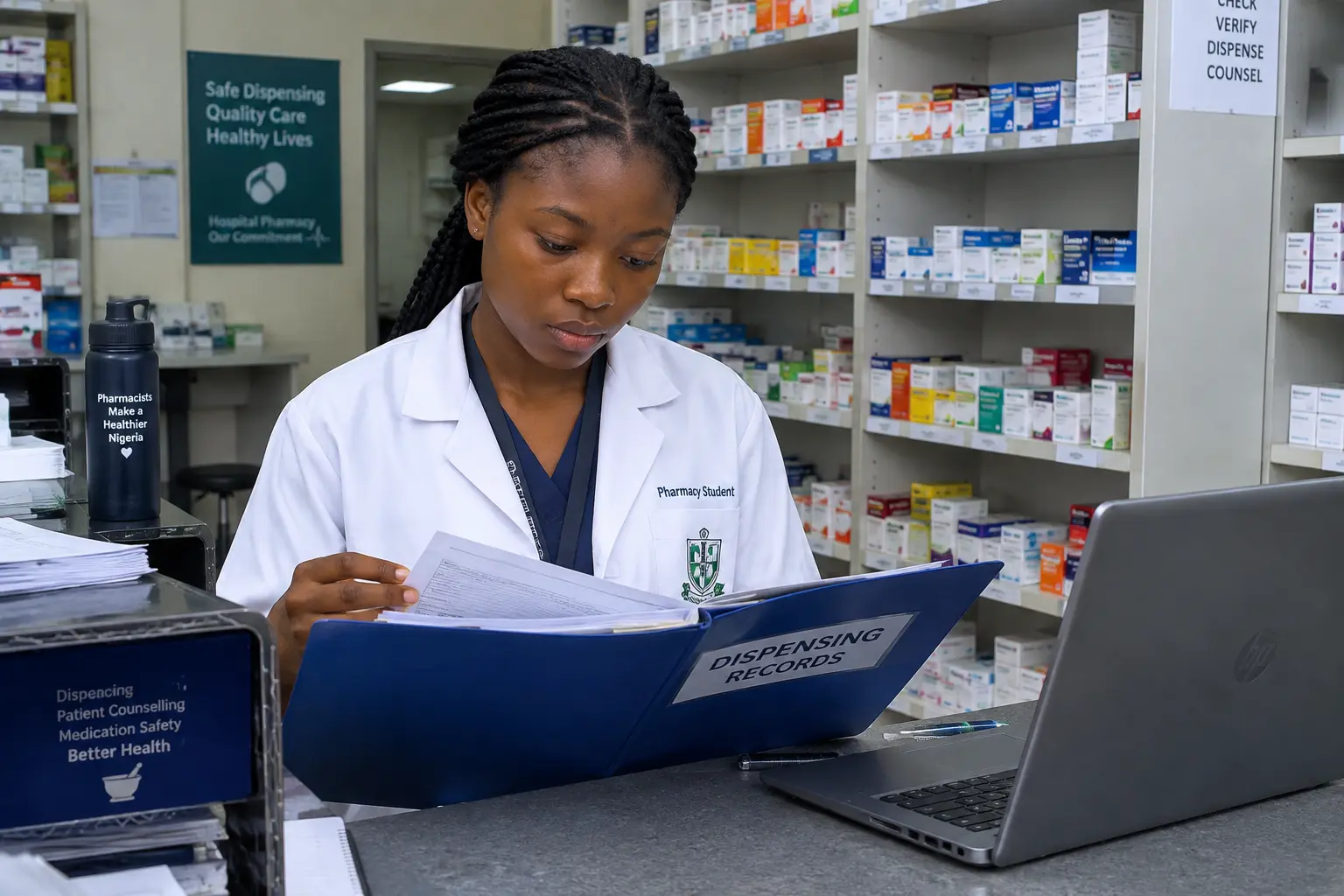
| Your own institution’s teaching hospital or community pharmacy records | Prescription patterns, dispensing records, patient-reported outcomes (with the relevant permission) | Drug-utilisation, adherence and pharmacovigilance topics — a very common pharmacy project design |
NAFDAC: Regulatory Data on Drug Safety and Counterfeits
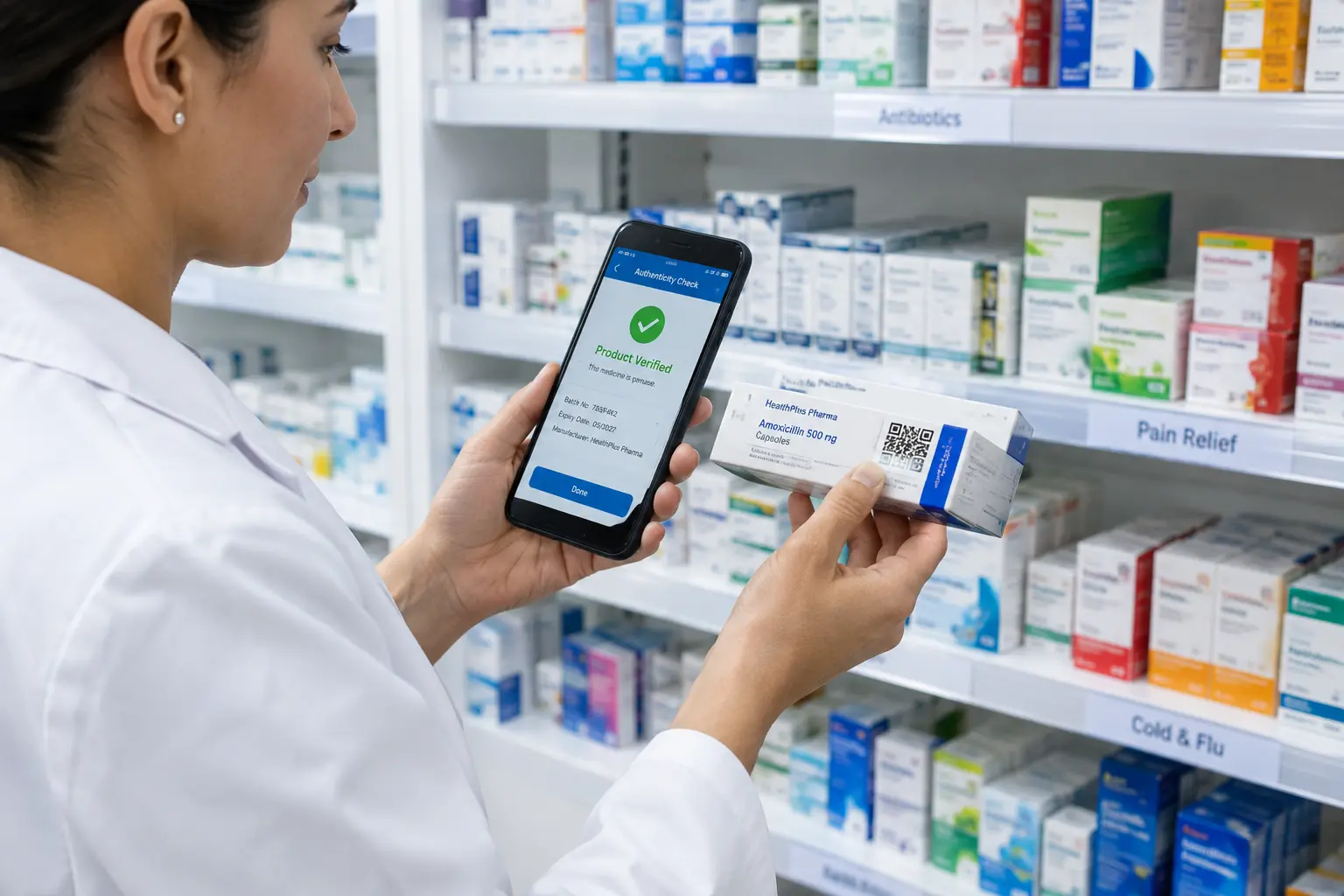
NAFDAC is Nigeria’s medicines and food regulator, and its published alerts, recalls and registration status pages are the correct citation for any project touching drug quality, counterfeit medicines, or whether a specific product is registered for sale in Nigeria. A project on counterfeit or substandard medicines should cite specific NAFDAC alerts you have actually opened for the product category you are studying, not a general claim that counterfeiting is a widespread problem — the specificity is what makes the citation defensible. If your project involves testing samples for authenticity (using a mobile authentication service, a colour-based reagent test, or laboratory analysis), state the exact method and its known limitations rather than presenting a positive or negative result as a definitive verdict on a product’s safety.
PCN: Practice Standards and Verification
The Pharmacists Council of Nigeria sets the practice standards pharmacy final year projects on professional conduct, accreditation or scope-of-practice topics should cite, and its website offers Verify Pharmacist and Verify Premises services, which are the correct reference for confirming registration status in a project involving named practitioners or facilities. PCN’s homepage displays its own headline figures (250K pharmacy practitioners and 352 accredited institutions) without a compilation date for either — if you cite these, state plainly that PCN does not date the figures on its homepage, rather than presenting them as current, precisely timed statistics.
NDHS: Population-Level Medicine and Health-Seeking Data
The Nigeria Demographic and Health Survey is conducted periodically and covers household-level health indicators including antenatal care, child health and health-facility use — useful for a pharmacy project examining medicine access or health-seeking behaviour at a population level rather than within one facility. Always cite the specific survey round you use (for example, NDHS 2018 or NDHS 2023–24, which The DHS Program lists as its Nigeria Standard DHS 2024) rather than referring to “the NDHS” generically, since indicators and questions change between rounds.
Federal Ministry of Health, NCDC and WHO: Policy and Comparative Data
The Federal Ministry of Health and the Nigeria Centre for Disease Control and Prevention (NCDC) publish national treatment guidelines and disease-surveillance information relevant to public-health-oriented pharmacy topics, while the WHO Global Health Observatory and the current WHO Model List of Essential Medicines are the correct references for any project comparing Nigeria’s medicine access or essential-medicines policy against international benchmarks. Confirm you are citing the current edition of the Essential Medicines List, since it is revised periodically and an outdated edition number is an easy, avoidable error — the same discipline applies to any Federal Ministry of Health treatment guideline you cite, since these are also updated on their own schedule independent of the WHO list.
Your Own Institution’s Records: A Very Common Pharmacy Project Design
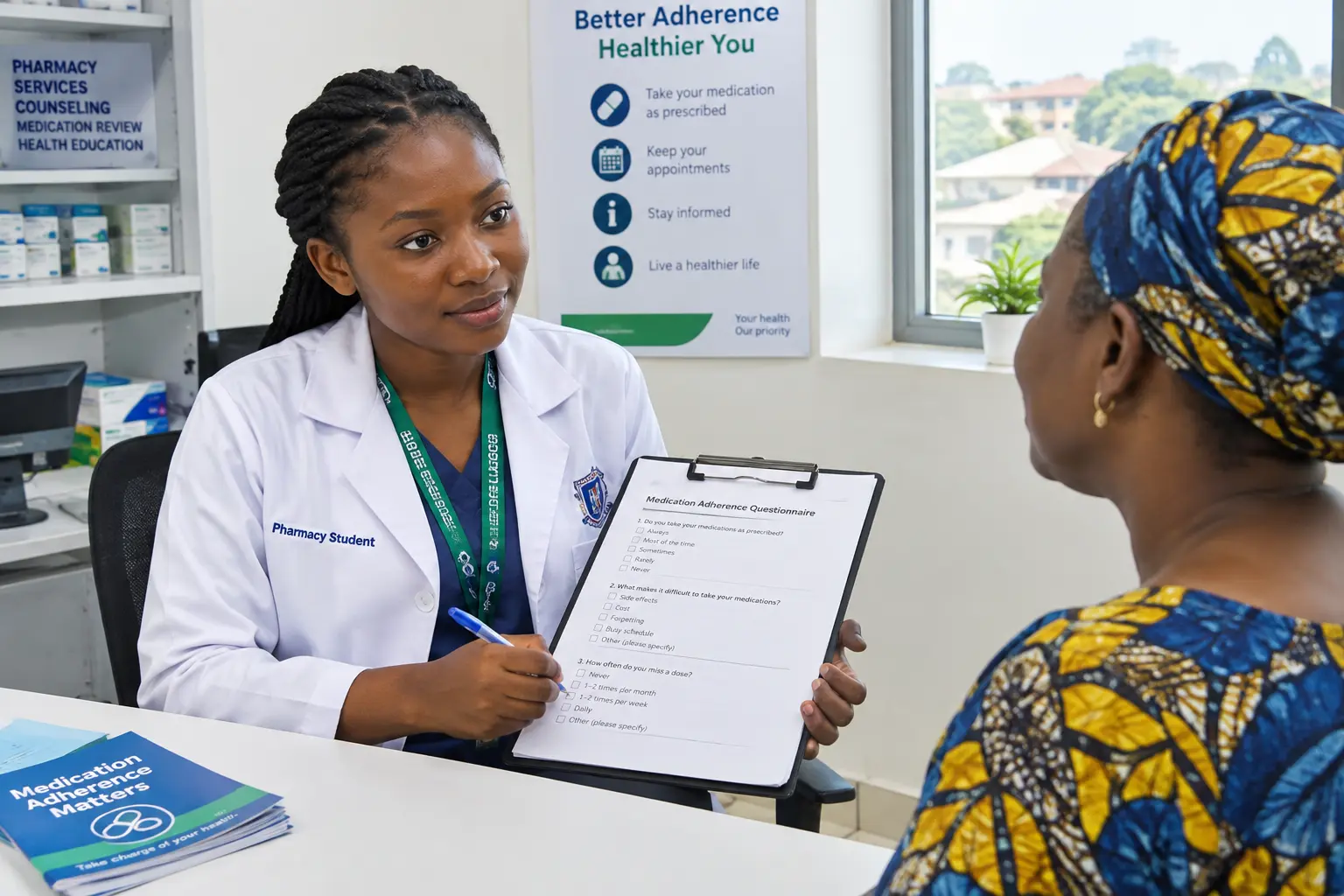
Many Nigerian pharmacy final year projects are not built on any of the national sources above at all — they are built on primary data collected from a teaching hospital pharmacy, a community pharmacy, or a patient population, examining drug-utilisation patterns, medication adherence, or adverse-reaction reporting. This design needs the relevant institutional ethics clearance before data collection begins (the same requirement nursing and public-health projects face), and a clearly stated sampling method for however many prescriptions, patients or dispensing records you review. Access itself is often the real bottleneck rather than the analysis: securing written permission from a hospital’s pharmacy department or medical records unit can take weeks, so start that request during your proposal stage rather than after your topic is already approved and your timeline is running.
How Do You Write the Chapter Three Data-Source Paragraph?
Whichever source or combination of sources your project uses, Chapter Three needs one clearly written paragraph stating exactly where your data came from, covering four things: the named source (a specific facility, survey round, or regulatory database), the exact period covered, how you accessed it (records review with named permission, a self-administered questionnaire, a downloaded public dataset), and any exclusions you applied (incomplete records, patients below a certain age, products outside your study’s scope). A vague sentence like “data was collected from a hospital” fails all four tests and is one of the most common reasons a pharmacy Chapter Three is sent back for revision before the panel will even look at Chapter Four.
For a records-review design specifically, add one more sentence confirming how patient identifiers were handled — anonymised at the point of extraction, or accessed only by staff with existing authorisation — since this is the detail an ethics committee and an examiner both check for independently of each other.
Common Faults With Pharmacy Data-Source Sections
| Fault | Fix |
|---|---|
| Citing “NAFDAC” or “PCN” generically with no specific page, alert or record referenced | Name the exact alert, registration record or practice-standard document you actually opened, with its date |
| Using an undated PCN or NAFDAC homepage statistic as if it were a precisely current figure | State plainly when a source does not publish a compilation date, rather than implying precision it does not have |
| Citing “the NDHS” without naming the survey round | Always name the specific round (e.g. NDHS 2018, NDHS 2023–24) since indicators change between rounds |
| No stated permission or ethics pathway for institutional records | State explicitly which committee approved access and how patient identifiers were handled |
| Mixing a national data source with a single-facility finding without noting the scope mismatch | Be explicit in your discussion about what a single-facility finding can and cannot say about the national picture |
Which Source Fits Which Common Pharmacy Project Type?
| Project type | Primary data source |
|---|---|
| Drug-utilisation or prescribing-pattern study | Your own institution’s hospital/pharmacy dispensing records |
| Medication adherence study | Patient interviews/questionnaires at a named facility, with ethics clearance |
| Counterfeit or substandard medicine study | NAFDAC alerts and recalls, plus your own lab testing if applicable |
| Pharmacovigilance/adverse drug reaction study | Facility records plus NAFDAC’s pharmacovigilance and adverse-reaction reporting channels |
| Community pharmacy practice or perception survey | Your own questionnaire, referencing PCN practice standards |
| Medicine-access or health-seeking-behaviour study | NDHS, supplemented by your own facility or community data |
Frequently Asked Questions
Can I use PCN’s “250K practitioners” figure in my introduction?
You can, but state clearly that PCN’s homepage does not give a compilation date for that figure, so present it as an approximate headline rather than implying it is a precisely dated statistic.
Do I need ethics approval to review hospital dispensing records for my project?
Most institutions require ethics clearance before accessing patient-linked pharmacy records, even for a records-review design with no direct patient contact — confirm with your institutional health research ethics committee before you start.
Where do I find NAFDAC’s product registration status for a specific drug?
NAFDAC publishes registration and recall information through its official announcements and alert pages; always cite the specific alert or registration record you opened, with its date, rather than a general reference to NAFDAC’s regulatory role.
Is the NDHS the right source if my project is about one specific hospital, not the whole country?
No — NDHS is a national household survey and is the wrong source for facility-specific findings; use it only as background context on national patterns, and rely on your own facility data for the actual project findings.
How do I cite the WHO Essential Medicines List correctly?
Cite the specific edition number and year (the list is revised periodically), and link to the current list on WHO’s own site rather than a summary from a secondary source, since edition numbers are easy to get out of date.
What if my department has no clear preference between primary data collection and using national data sources?
Primary data collection (facility records or a patient survey) is a common design for an undergraduate pharmacy project and gives you a concrete, defensible dataset you control — it is a sensible default unless your topic is explicitly comparative or policy-focused, which is where the national and international sources above become more relevant.
Can I combine a national data source with my own primary data in the same project?
Yes, and this is a common and defensible design — for example, using NDHS figures as national context in your background of the study, then presenting your own facility-level data as the actual findings that answer your research questions, as long as you keep the two clearly distinguished rather than blending them into one claim.
How recent does my facility data need to be?
There is no single national rule; recent data (for example, from the current or preceding year) best reflects current practice, but confirm your department’s specific expectation with your supervisor.
Do I need to disclose if my sample size was limited by how many records were available?
Yes — state the total number of records or patients that met your inclusion criteria and were actually available, and address any resulting limitation honestly in your limitations section rather than presenting a small, opportunistic sample as if it were a planned, adequately powered one.
Whichever data source your project uses, structuring your Chapter Three data-source paragraph correctly and connecting your findings back to your research questions takes careful drafting. More than 9,000 students have used Tesify to write over 15,000 chapters, and every one is 100% written by you: your sources, your data and your findings stay your own work. Start your project with Tesify and turn your data sources into a finished chapter.
If your project needs institutional ethics clearance, the process is close to what a nursing final year project’s ethics approval requires, and if you are running a practice or perception survey, see how to design and validate a questionnaire first. For data sources in adjacent fields, see where engineering project students and where economics project students in Nigeria find their data. If your topic touches a research-gap statement first, see worked research gap examples from a health-sciences field.