
Your SIWES placement ends in a few weeks and the technical report is still a folder of loose logbook entries. This is a very common position for Nigerian electrical and electronics engineering students at this point in the scheme — not behind on the work itself, but behind on turning months of daily entries into the structured document your department actually grades. The good news: everything the report needs is already in your logbook, written the day it happened. The task left is organising and writing it up, not generating new content from nothing. This guide walks through exactly what a complete SIWES submission for an electrical or electronics placement contains, and where students most often lose marks.
What is SIWES, and who actually administers it?
The Students’ Industrial Work Experience Scheme (SIWES) is administered by the Industrial Training Fund (ITF), the federal agency that places Nigerian polytechnic, college of education and university students in industry attachments as a mandatory part of science, technology, engineering and related programmes. For electrical and electronics engineering students, a typical placement runs at a power distribution company, a telecoms operator, an electronics manufacturing or assembly firm, or an engineering consultancy, where you work under an industry-based supervisor while your institution assigns its own SIWES supervisor to assess your final documentation.
What documents does a completed SIWES actually require?
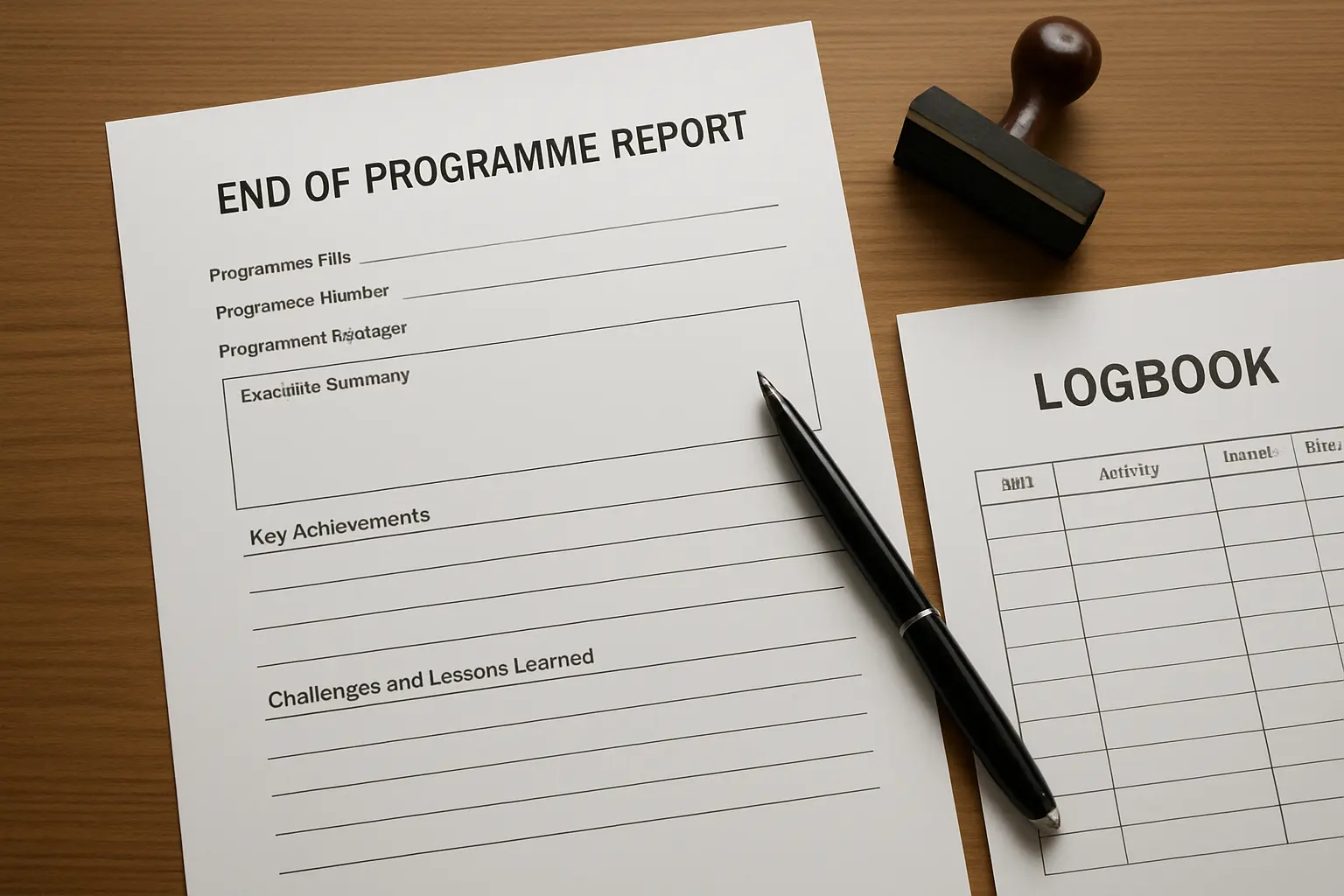
Two separate documents carry most of your SIWES grade, and confusing them is a common, avoidable mistake. The logbook is your day-by-day record, kept throughout the attachment — what you did each working day, the tools or equipment used, problems you encountered and what you learned — endorsed weekly by your industry-based supervisor and signed by your institution’s SIWES supervisor during their supervision visit. The ITF Form 8 — headed on the form itself as the End of Year Program Report Sheet, and often called the End of Programme Report Sheet — is a separate, compulsory end-of-attachment form in three parts: Part A, which you complete yourself with your personal and training details and a training summary; Part B, completed by your employer or industry supervisor with their assessment of your performance and their signature and stamp; and Part C, completed by your institution. The form also notes that employer-completed forms go to the institution under seal, so confirm the signatures and stamps are in place well before your submission deadline, not the day of.
What goes in the written technical report, beyond the logbook and Form 8?
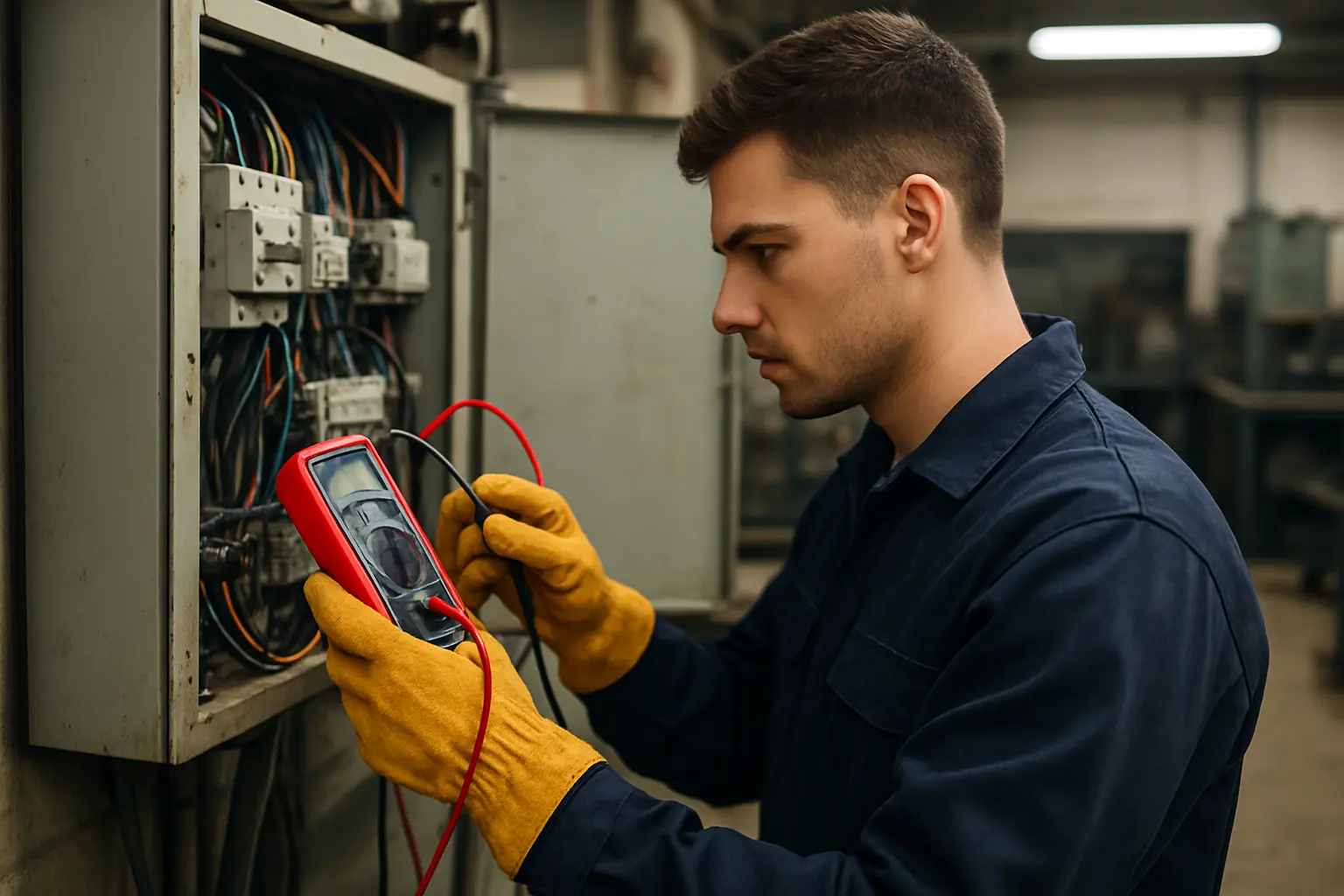
Most departments additionally require a written technical report distinct from the logbook and Form 8 — a structured document that turns your daily entries into a coherent account of what you learned. For an electrical or electronics placement, this typically covers: a company profile (the organisation’s structure, the department you worked in, its role in the wider industry); the health, safety and environment (HSE) induction you received before starting hands-on work; the specific technical skills and processes you were exposed to — panel wiring, cable jointing, transformer maintenance, PLC programming, circuit testing and fault-finding, use of multimeters, oscilloscopes and insulation testers, whichever your placement actually covered; a summary of specific projects or tasks you contributed to; and a reflection on how the placement relates to your coursework, closing with recommendations for future students at the same organisation. Write this from your logbook, not from memory months later — the logbook’s dated entries are what give your technical report the specific, verifiable detail a supervisor checks for.
How is a SIWES technical report different from your final year project?
A SIWES report documents what you observed and did during an industry attachment — it is descriptive and reflective, not a research design with objectives, hypotheses and a methodology chapter the way your eventual final year project is. Do not import final-year-project structure (Chapter One to Five, research questions, a literature review) into a SIWES report; your department’s SIWES guidelines set their own, usually shorter and more descriptive, structure. If your placement happens before your final year project, the technical skills and industry context you documented can genuinely inform your eventual project topic choice — a placement at a power distribution company, for instance, can make an electrical engineering final year project on transformer maintenance or fault diagnosis more grounded and specific than a topic chosen with no industry exposure behind it.
Who is eligible for SIWES, and how long does an electrical/electronics placement typically run?
SIWES applies to students enrolled in approved science, technology, engineering and related programmes at Nigerian universities, polytechnics and colleges of education — electrical and electronics engineering is squarely within scope, alongside disciplines like computer science, civil engineering and applied sciences. Placement duration and timing vary by institution and by programme level (a polytechnic ND/HND schedule differs from a university engineering programme’s SIWES window), typically falling somewhere in the range of several months to a full academic year depending on your specific curriculum — confirm your own department’s exact duration and the semester it falls in with your SIWES coordinator rather than assuming a fixed national figure, since this detail is set institutionally.
How does your SIWES placement connect to your eventual final year project?
An electrical or electronics engineering final year project needs the same kind of grounded, verifiable technical detail your SIWES report does — our guide to where engineering students find project data in Nigeria covers the named sources (power sector regulators, standards bodies, manufacturer documentation) a technical engineering project draws on, several of which overlap directly with the industry context your SIWES placement already exposed you to. A student who documented real transformer maintenance procedures during SIWES has a stronger, more specific starting point for a final year project on the same subject than one starting from a textbook topic list alone. If your final year project is still ahead of you, our broader guide to starting a blank final year project this week covers the same first-move problem this article addresses for SIWES, applied to Chapter One.
Common mistakes that cost marks in an electrical/electronics SIWES report
- A logbook with generic entries. “Learned about transformers today” tells a supervisor nothing; “Assisted with insulation resistance testing on a 500kVA distribution transformer using a 5kV megger, recorded readings against manufacturer tolerance” does.
- Writing the technical report from memory at the end, without the logbook. Specific dates, equipment names and readings are what separate a credible report from a vague one — this only works if you kept the logbook current throughout.
- Missing stamps or signatures on Form 8. Confirm both your employer’s and your institution’s sections are properly stamped and signed well before your submission deadline.
- No health and safety section. HSE induction and practice is a standard expectation in an engineering placement report, particularly for electrical work, and its absence is a noticeable gap.
- Confusing the SIWES report with a final year project structure. Follow your department’s actual SIWES report template, not a Chapter-One-to-Five thesis format.
Why the last-week scramble happens, and how to actually fix it
The SIWES report crunch is rarely about ability — it is about volume. Months of logbook entries, HSE inductions, and technical exposure across multiple tasks is a lot of raw material to organise into a coherent document in the final week before submission, especially while you are also finishing your last weeks on placement. The fix that actually works is not writing faster under pressure; it is organising your logbook entries by the report’s section headings — company profile, HSE, technical skills, project contributions, reflection — before you write a single paragraph of connected prose, so the writing stage becomes assembly rather than invention. This is exactly the stage Tesify is built to help with: feed in your logbook entries and it drafts each section in a coherent, properly registered academic voice, built from what you actually documented, keeping every technical detail traceable back to your own dated entries rather than generated from nothing. Your logbook’s plagiarism exposure is essentially zero since it is a personal record, and the technical report drafted from it is your own documented experience — a plagiarism check is still worth running before submission if your department’s SIWES process includes one, and our comparison of plagiarism checkers for Nigerian students covers the free and paid options.
Frequently asked questions
How much does Tesify cost to help with a SIWES report?
Tesify’s free plan is the entry point — no card required — and covers drafting help for your report’s structure and sections. It is built for academic writing broadly, including SIWES technical reports, not only final year projects.
Is it acceptable to use AI to help draft my SIWES report?
The content — what you actually did, saw and learned during your placement — has to come from you and your logbook; an AI drafting tool can help structure and phrase that content clearly, the same way it would for any other academic writing, but cannot invent the placement experience itself. Check your specific department’s stated position on AI assistance before relying on it heavily.
What if my institution-based supervisor never visited my placement site?
Supervision visit frequency varies by institution and by how many students a supervisor is assigned; if a visit has not happened and your submission deadline is approaching, contact your SIWES coordinator directly rather than waiting, since Form 8’s institutional section needs your supervisor’s assessment.
Can I write my SIWES report if I lost some logbook pages?
Reconstruct what you can from memory and any other records (emails, photos of work, messages to colleagues) as soon as possible, and be honest with your SIWES coordinator about the gap — a partially reconstructed logbook is a better position than an unexplained one at submission time.
Does a SIWES report need references and citations?
Most SIWES reports are descriptive rather than citation-heavy, but if you reference technical standards, equipment manuals or company documentation, cite them the same way your department expects for any other academic document.
What happens if my SIWES report is rejected or marked incomplete?
Requirements and consequences vary by institution; some allow a resubmission window, others treat a rejected SIWES as a more serious academic hold. Contact your SIWES coordinator immediately if your report is flagged, rather than assuming the issue will resolve itself.
Is SIWES the same requirement for polytechnic (ND/HND) and university electrical engineering students?
The scheme itself is administered the same way by ITF across institution types, but the specific timing, duration and departmental report template can differ between a polytechnic’s ND/HND programme structure and a university’s engineering curriculum — follow your own institution’s SIWES unit guidance rather than a generic timeline.
Can I get SIWES report writing help if I am not studying electrical or electronics engineering?
Yes — Tesify drafts SIWES reports for any discipline’s placement experience, organised around your own logbook and the structure your specific department expects, not only electrical and electronics engineering.
Tesify turns your logbook entries into a structured, well-written SIWES technical report — organised by section, in the register your department expects, built from what you actually documented. Start free, no card required.