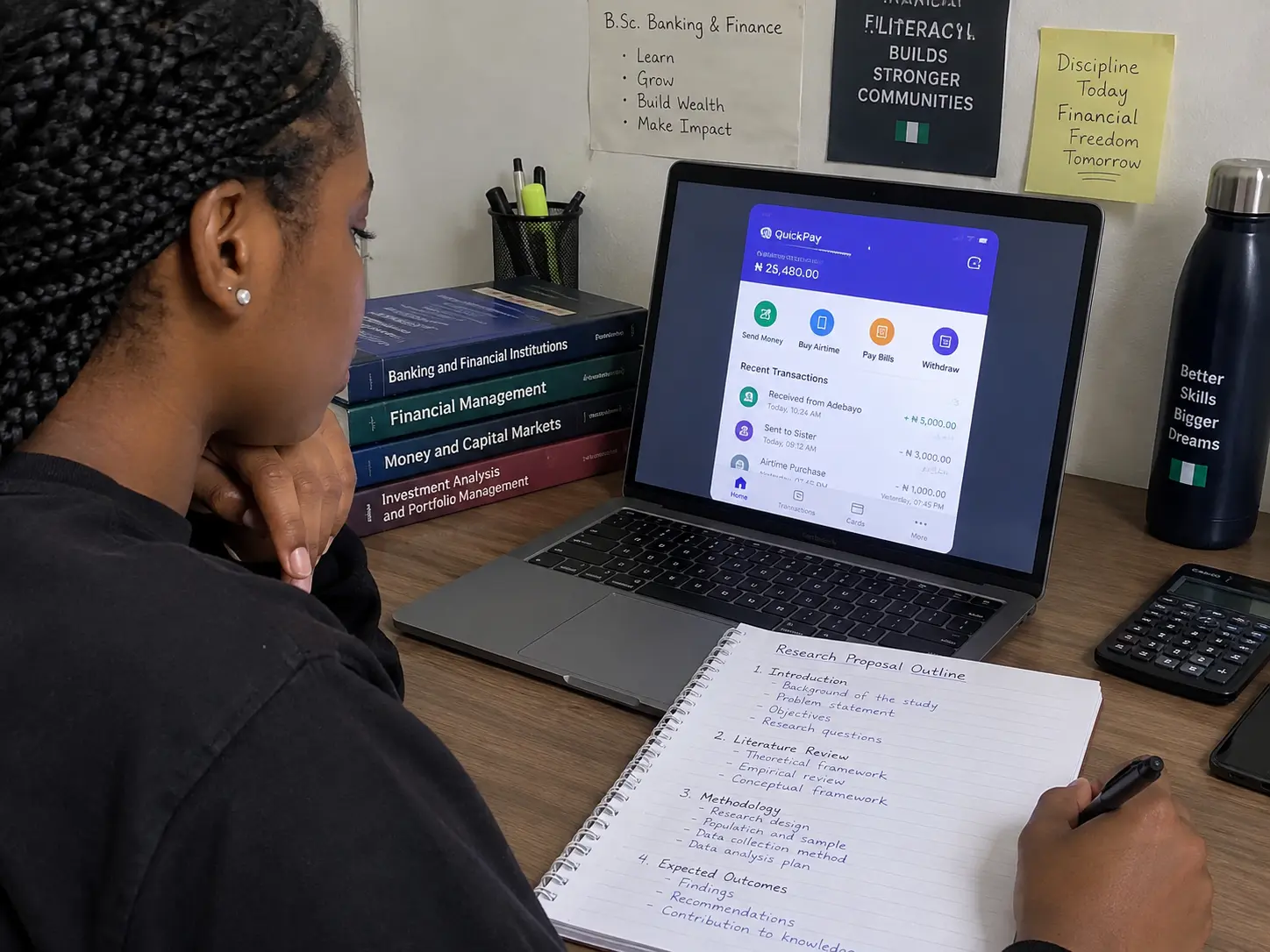
“The role of fintech in the Nigerian banking sector” sounds like a strong, current topic until your supervisor asks the one question that sinks it: which fintech, doing what, measured how? A topic that broad cannot be researched in one undergraduate project, and vagueness of exactly this kind is a common reason topics are sent back. Here is how to narrow a fintech interest into a problem statement, objectives, variables and a method your panel will actually approve, with a full worked example at the end.
Why “Fintech in Nigerian Banking” Gets Rejected as a Topic
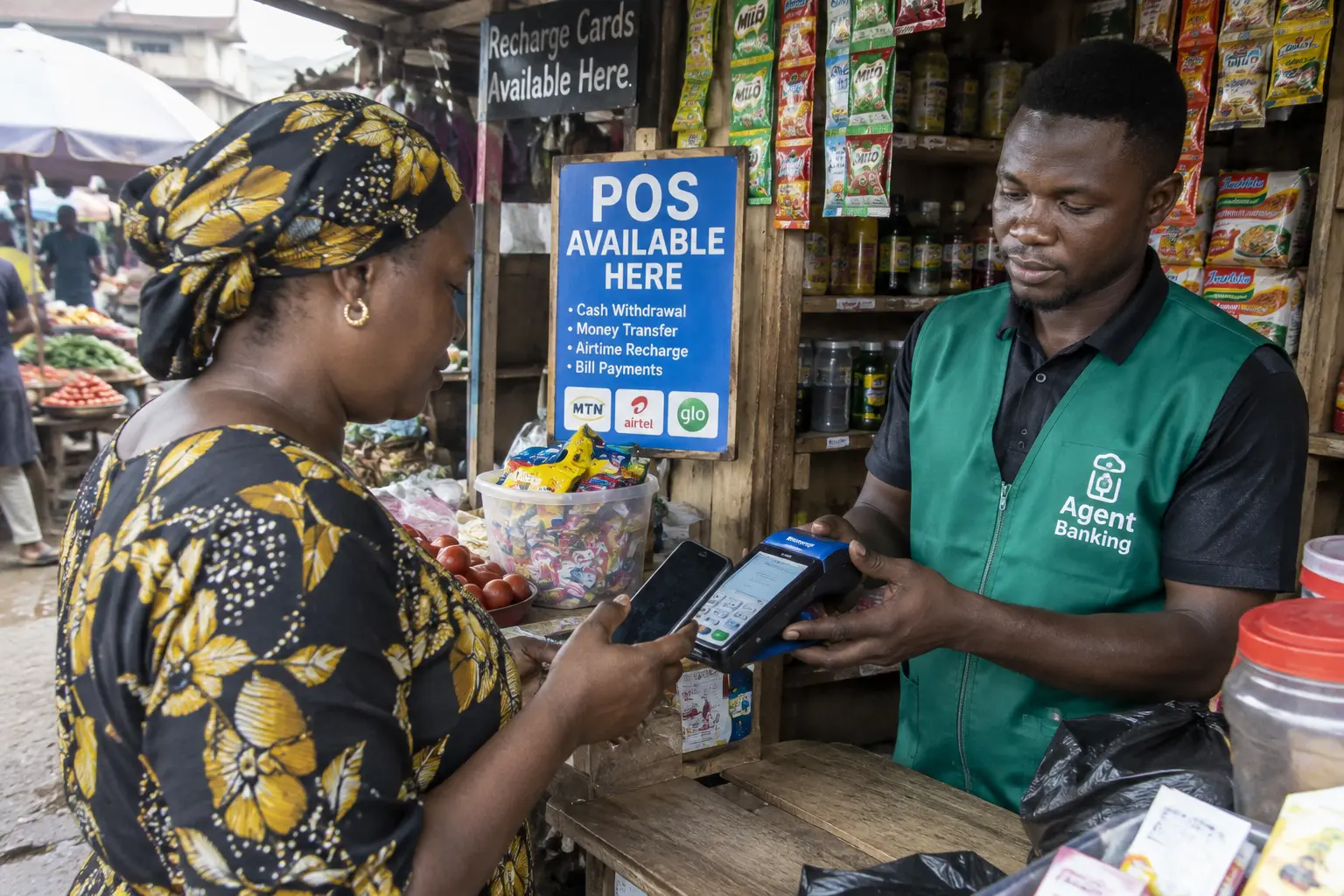
Fintech is not one thing — mobile money, digital lending apps, POS agent banking, buy-now-pay-later services, robo-advisory platforms and blockchain-based payment systems are different products, different regulatory categories, and different customer bases. A topic naming “fintech” generically cannot state a specific, testable research question, because it is not clear which of these you are actually studying, on which population, with which outcome. The fix is always the same: pick one fintech category, one specific angle on it, and one measurable outcome.
Step 1: Narrow to One Fintech Category and Angle
| Fintech category | A narrow, researchable angle |
|---|---|
| Mobile money / digital wallets | Adoption drivers among a specific population (e.g. market traders, university students) |
| Digital lending apps | Default risk factors, or borrower awareness of loan terms and interest structures |
| POS agent banking | Financial inclusion impact in a specific underserved area, or agent liquidity management challenges |
| Buy-now-pay-later (BNPL) | Consumer overspending risk, or merchant adoption barriers |
| Digital banks / neobanks | Customer trust and switching behaviour compared with traditional banks |
| Blockchain/crypto-adjacent payments | Regulatory compliance challenges, or adoption barriers among a specific user group |
Pick one row, then narrow further to your specific institution, population or geographic area — “mobile money adoption among market traders in one named Lagos market” is a defensible topic; “mobile money in Nigeria” still is not.
Step 2: Frame the Problem Statement (Illustrative Example)
The example below is illustrative — a shape to adapt, not a topic to copy verbatim.
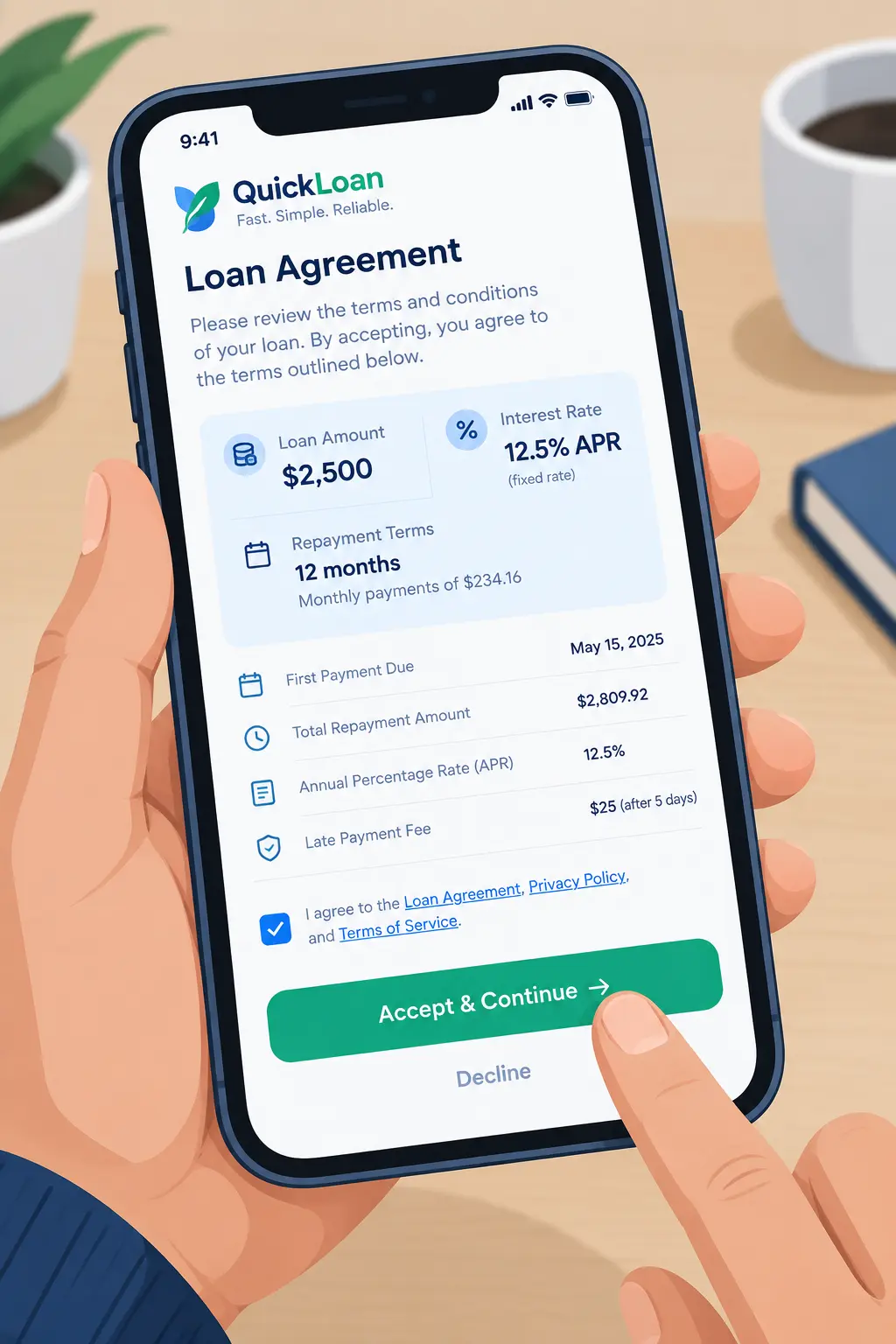
Illustrative problem statement (digital lending apps): “Digital lending apps have expanded rapidly in Nigeria, offering short-term loans with minimal documentation. However, limited evidence exists on whether borrowers in Ikeja Local Government Area, Lagos, understand the effective interest rates and repayment terms before accepting these loans, and reports of unexpected default and aggressive recovery practices persist without a clear local study of borrower awareness driving this gap.” This statement names the specific product (digital lending apps), the specific population, and the specific missing evidence — exactly the three things a generic “fintech in banking” topic cannot state.
Step 3: Write Objectives That Match the Narrowed Problem
Objectives should convert the problem statement directly into things you will measure — not restate the topic in different words. For the digital lending example, defensible objectives include: (1) to assess the level of borrower awareness of loan terms and interest rates among users of digital lending apps in Ikeja LGA; (2) to examine the relationship between awareness level and reported repayment difficulty; (3) to identify the factors influencing borrowers’ choice of a digital lending app over traditional bank credit. Each objective names something you will actually collect data on, not a general aspiration to “study the impact of fintech.”
Step 4: Identify Your Variables and, If Applicable, Hypotheses
A quantitative fintech project typically needs an independent variable (awareness level, trust, perceived ease of use), a dependent variable (adoption, repayment behaviour, switching intention), and often a moderating factor (income level, digital literacy, age). If your design supports a hypothesis, state it in the same terms as your objectives — for example, “there is a significant relationship between borrower awareness of loan terms and reported repayment difficulty” — rather than a vague claim that fintech “affects” banking.
Step 5: Choose a Method and Be Honest About Regulatory Sources
Most fintech topics at undergraduate level use a survey design (structured questionnaire to a named population) analysed with descriptive statistics and, where a hypothesis is stated, an appropriate inferential test (chi-square, correlation, regression). If your project references fintech regulation, first confirm which regulator covers your category, then cite the specific document you have opened. For payments products, the CBN’s Payments System page lists documents such as the Framework and Guidelines on Mobile Money Services in Nigeria and the Supervisory Framework for Payment Service Banks (both 2021), the Regulatory Framework on Open Banking in Nigeria (2021) and the Framework for Regulatory Sandbox Operations (2020) — check whether a later revision exists before you cite one. Not every fintech category sits with the CBN: digital consumer lending apps, for example, fall under the Federal Competition and Consumer Protection Commission’s Digital, Electronic, Online or Non-Traditional Consumer Lending Regulations, 2025, whose implementation has been the subject of court proceedings, so check the FCCPC’s current releases before describing their status. If you cannot open the specific document naming the rule you want to cite, describe the regulatory landscape in general, non-specific terms instead of inventing a rule or number.
A Worked Example: The Full Framing, Start to Finish (Illustrative)
The example below is illustrative — a complete shape you can adapt, not a topic to copy verbatim.
Working title: “Borrower Awareness of Loan Terms and Repayment Difficulty Among Users of Digital Lending Apps in Ikeja Local Government Area, Lagos, Nigeria.”
Problem statement: As set out above — limited local evidence on whether borrowers understand loan terms before accepting digital lending app credit, alongside anecdotal reports of default and recovery disputes.
Objectives: (1) assess borrower awareness levels; (2) examine the relationship between awareness and repayment difficulty; (3) identify factors influencing app choice over traditional credit.
Research questions: What is the level of borrower awareness of loan terms among digital lending app users in Ikeja LGA? Is there a significant relationship between awareness level and reported repayment difficulty? What factors most influence a borrower’s choice of a digital lending app?
Hypothesis: There is no significant relationship between borrower awareness of loan terms and reported repayment difficulty (stated as a null hypothesis for testing).
Population and sample: Adult digital lending app users in Ikeja LGA, sampled via a convenience or snowball method (digital lending users are not listed in any public register, so a probability sample is rarely feasible at undergraduate level — state this limitation honestly rather than overstating your sample’s representativeness).
Method: A structured questionnaire covering demographic data, awareness items (interest rate disclosure, repayment schedule, penalty terms), and self-reported repayment experience, analysed with descriptive statistics for objective one and a chi-square or correlation test for objective two — see the linked guide below if you are unsure which specific test fits your variable types.
Common Faults With Fintech Topic Framing
| Fault | Fix |
|---|---|
| “The impact of fintech on the Nigerian banking sector” as a whole topic | Narrow to one fintech category, one population, one measurable outcome |
| Objectives that just restate the topic in different words | Write each objective as something you will actually measure or test |
| Citing a specific CBN percentage, threshold or rule from memory | Only cite regulatory specifics from a document you have actually opened; otherwise describe generally |
| Assuming the CBN regulates every fintech product | Confirm the regulator for your category first — digital consumer lending, for example, sits with the FCCPC |
| Treating “fintech adoption” as self-evidently positive with no negative angle considered | Include risk, barrier or unintended-consequence angles (default risk, exclusion of non-smartphone users, data-privacy concerns) for a more defensible, balanced project |
| No stated ethics or consent process for survey respondents | State how informed consent was obtained and how responses were kept confidential, the same expectation any human-subject survey faces |
The balanced-angle fault deserves one more sentence: a project on any emerging technology is stronger when it engages with its downsides, not just its promise, since a one-sided “fintech is good” framing reads as marketing rather than research — building at least one risk or barrier dimension into your objectives from the start makes your literature review easier to write too, since risk-focused sources exist for most fintech categories even where adoption-focused local studies are thin.
Frequently Asked Questions
Is a fintech topic considered more difficult to get approved than a traditional banking topic?
Not inherently — the approval difficulty comes from vagueness, not the subject itself; a well-narrowed fintech topic with clear objectives and a feasible method is approved as readily as a traditional banking topic.
Do I need special permission from a fintech company to study its users?
If you are surveying the general public who use a fintech product (not the company’s internal staff or proprietary data), you generally do not need the company’s permission, but you do need your institution’s standard research ethics clearance for collecting data from human respondents.
Can I study more than one fintech category in the same project?
It is possible but adds complexity — most undergraduate timelines are better served by studying one category in depth rather than comparing several superficially; a comparative design across two categories is more suited to a postgraduate-level project.
What if I cannot find a published CBN guideline for the specific fintech category I want to study?
First check whether another regulator covers it — digital consumer lending, for example, is regulated by the FCCPC rather than the CBN. If no dedicated rule exists yet, state plainly in your literature review that the regulatory framework is still developing, rather than fabricating a rule that does not exist.
Should my topic focus on the consumer side or the bank/fintech provider side?
Either is valid — a consumer-side project (adoption, awareness, trust) is generally easier to design as a student survey; a provider-side project (a bank’s fintech partnership strategy, a fintech’s compliance approach) usually needs case-study access that is harder to arrange, so confirm access before committing to that angle.
Is it acceptable to base my topic on a fintech product I personally use?
Yes, personal familiarity with a product is a reasonable starting point for choosing a topic, as long as your actual research design is objective and does not rely solely on your own experience as evidence.
How large a sample do I need for a fintech user survey?
There is no fixed national minimum — your sample size should be justified by your chosen sampling method and analysis plan, so state and defend your own figure rather than copying a number from another project.
What is the difference between studying “fintech adoption” and “financial inclusion” as a topic?
They overlap but are not identical — adoption studies focus on why and how people take up a specific product, while financial-inclusion studies focus on access and exclusion at a population level; be clear in your problem statement which lens your project actually uses, since the two need different objectives and often different data.
A fintech topic this specific — with a named category, a named population, and objectives that actually match your problem statement — is a strong base for your Chapter One. More than 9,000 students have used Tesify to write over 15,000 chapters, and every one is 100% written by you: your topic, your objectives and your analysis stay your own work. Start your project with Tesify and turn your fintech interest into an approvable Chapter One.
Once your topic is scoped, see the full banking and finance topics list for more angles sorted by data availability, and if you are still assembling your topic list, see the AI and digital-transformation angles for business administration projects, which cover related ground. Confirm which statistical test actually fits your variables before you finalise Chapter Three. Before you finalise your method, know where the line is between AI help and misconduct if you use any AI tool on your data or writing, and see how to write a research proposal to turn this framing into your full Chapters One to Three.