A computer science project proposal is not a shorter version of your final report — it is Chapters One to Three written in the future tense, defended before you write a line of code, proposing a system that is small enough to actually design, build and test before your deadline. The proposal a supervisor approves fastest names a concrete system, a specific user group, and a methodology, not a broad problem area.
Why computer science proposals get rejected more often than other departments’
A computer science proposal fails for a different reason than most other departments’ proposals: scope. “An AI system to improve education in Nigeria” is not a project, it is a research programme, and a supervisor who approves it is setting a student up to either not finish or to submit something far smaller than the title promised. The site’s general guide to writing a research proposal for a Nigerian final year project covers the shared structure every department uses; what is specific to computer science is that your proposal has to name the exact system you will build, not the field it belongs to.
The seven sections a computer science proposal needs
- Background of the study — the real problem your system responds to, stated concretely (a named institution’s manual, error-prone process; a gap in an existing tool; a specific inefficiency you can point to).
- Statement of the problem — one paragraph naming exactly what is broken and for whom, written so a reader unfamiliar with the domain understands the pain in one read.
- Aim and objectives — one aim sentence (“to design and implement a web-based result management system for [named context]”), then three to five objectives that are individually buildable and testable — “design the database schema,” “implement the result-computation module,” “test the system with [N] sample records” — not vague verbs like “explore” or “investigate.”
- Significance of the study — who benefits and how, kept to what your system can actually demonstrate, not a claim about national digital transformation.
- Scope and limitations — what the system will and will not do, stated before you build it, not discovered afterward; a computer science panel checks this section against your Chapter Four results specifically, so an honest scope here protects you later.
- Brief literature review — two or three existing systems or approaches, what each does well or badly, and where your system sits relative to them; a full review belongs in Chapter Two of the final report, but the proposal needs enough to show you have looked.
- Proposed methodology and tools — the system-development methodology you will follow (see below), the proposed tech stack, and a realistic week-by-week plan to your defence date.
A worked example: proposal for a school result management system
For an illustrative topic, “Design and Implementation of a Web-Based Result Management System for a Nigerian Secondary School,” a proposal’s core paragraphs might read:
Problem statement (illustrative): “Many Nigerian secondary schools still compute and compile termly results manually or in unlinked spreadsheets, which is slow, error-prone, and gives parents no direct way to view a child’s result. This project addresses that problem for [a named school or school type] by designing a web-based system that computes results automatically and gives parents restricted online access to their child’s report.”
Objectives (illustrative): “(1) design a relational database schema for students, subjects, scores and terms; (2) implement a results-computation module that calculates term averages, positions and grades from raw scores; (3) implement role-based access for administrators, teachers and parents; (4) test the system with a sample dataset of [N] students across [M] subjects and report on accuracy and usability.”
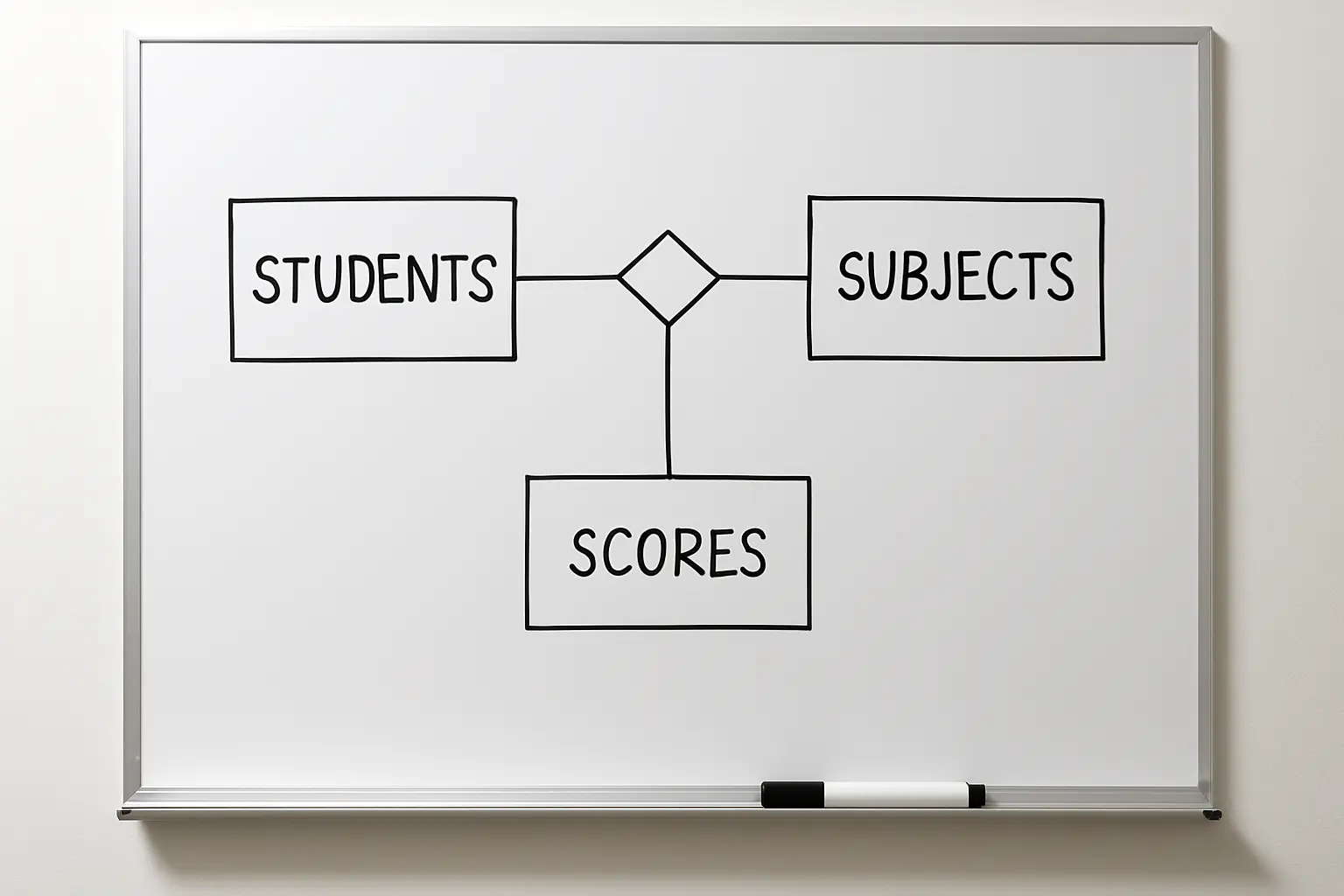
Notice each objective names a specific, buildable piece of the system — a panel reading this proposal can already picture your Chapter Four results table before you have written a line of code.
What does the proposed tech stack section look like?
Name your proposed layers explicitly rather than saying “a suitable programming language will be chosen.” For the result-management example, an illustrative stack section might read: backend framework (for example, a PHP framework such as Laravel, or a Python framework such as Django — pick the one your department teaches and you have working experience in, not the most fashionable option); database (MySQL or PostgreSQL for a relational schema of the size a school result system needs); frontend (server-rendered templates or a lightweight JavaScript framework, depending on whether the parent-access portal needs to feel like a modern web app or a simple form-based site); hosting and deployment plan for the demo you will show at defence. A supervisor reading a named, justified stack can tell within one paragraph whether your plan is realistic for your own skill level and your timeline — vague stack descriptions are one of the fastest ways a proposal gets sent back for revision.
Which methodology do you propose, and how do you justify it?
Nigerian computer science departments still commonly expect a named system-development methodology in the proposal, chosen and justified rather than picked by default. The site’s guide to SSADM vs Waterfall vs Agile vs Prototyping for a computer science project compares the four methodologies most Nigerian departments accept on exactly the criteria a proposal needs to justify a choice against — pick one whose deliverables (data-flow diagrams for SSADM; sprint increments for Agile; a working prototype early for Prototyping) actually fit how you plan to build your specific system, and say so in one sentence rather than listing all four and picking the last one by default.
What goes in the proposed work plan?
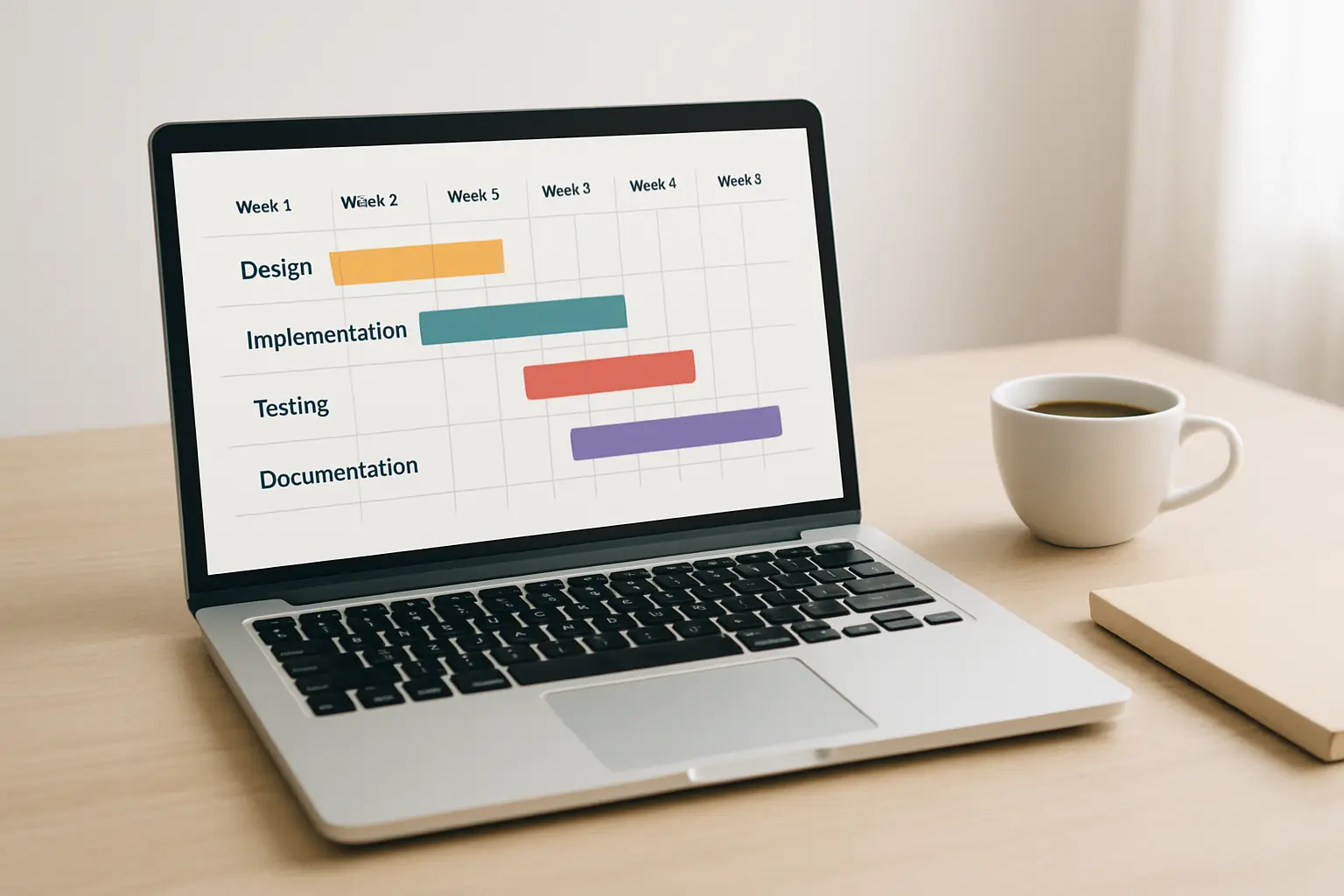
A realistic week-by-week plan from proposal approval to defence, usually split into phases that mirror your chosen methodology: requirements and design (database schema, system architecture diagrams), core-module implementation, integration and testing, and documentation/write-up. Build in buffer time before your defence date specifically for testing and fixing bugs discovered late — the most common computer science project timeline failure is treating testing as the last week rather than an ongoing activity throughout implementation.
What should you already know before you write the scope and limitations section?
Decide now what your system will not do, because your Chapter Four results and your Chapter Five limitations section both have to match this proposal honestly. The site’s guide to what goes in the limitations section of a computer science project — dataset size, testing conditions, features deliberately left out — is worth reading at proposal stage, not only at the end, since a scope you write honestly now is a limitations section you do not have to invent under pressure later.
Where does your data come from, and how do you propose to test the system?
If your system needs real or realistic data to build and test against — student records, a labelled dataset for a machine-learning component, sample transactions — name your data source in the proposal itself and confirm access before your supervisor signs off, not after. The site’s guide to where computer science project students in Nigeria find data covers Kaggle, UCI, NITDA/NCAIR and other sources by project type — a proposal that names a specific, already-available dataset is a stronger proposal than one that assumes data will simply appear.
How is a proposal different from the eventual software write-up?
The proposal describes a system that does not exist yet, in the future tense, and is approved before you build anything; the eventual Chapters Three to Five of your final report describe what you actually built and tested, in the past tense, evidenced by working code and real test results. The site’s guide to writing up a finished software project as a final year project covers that later stage — useful to skim now so you know what your proposal’s promises will eventually have to be evidenced against.
Three faults that get a computer science proposal sent back
First, a system too large to build in the time available — a proposal that names five major modules and three user roles for a one-semester build is a proposal your supervisor should reject, not approve. Second, objectives that describe research rather than a build — “investigate the impact of digital result systems on school administration” is not something Chapter Four of a computer science project can test; “implement and evaluate” is. Third, a proposed methodology that does not match the actual plan — naming Agile in the proposal and then building the whole system in one pass with no incremental review is a mismatch a panel will notice at defence.
Where Tesify fits
Tesify can turn your system idea into a first-draft proposal in the structure above — background, problem statement, objectives scaled to what you can realistically build, and a methodology justification — which you then check against your own system’s actual scope and your supervisor’s specific expectations. Start with Tesify’s free plan to draft your Chapters One to Three before your proposal defence.
Frequently Asked Questions
How long should a computer science project proposal be?
Most Nigerian departments expect a proposal of roughly 10 to 20 pages covering the seven sections above — enough to demonstrate the system is well-scoped, without pre-writing your entire final report.
Can you change your proposed methodology after your proposal is approved?
Yes, if you have a genuine reason and inform your supervisor — a proposal is a plan, not a contract — but an undisclosed switch discovered at defence looks worse than a disclosed, justified change made early.
Does a computer science proposal need a literature review chapter, or just a brief section?
A brief section covering two or three comparable existing systems or approaches is standard at proposal stage; the full Chapter Two literature review comes later, once the proposal itself is approved.
What if you cannot get access to real data for your proposed system?
Say so in your proposal and name a fallback — a synthetic or publicly available dataset, or a smaller-scale test with anonymised sample data — rather than assuming access you have not confirmed; a proposal that already has a data-access plan is stronger than one that will discover the problem mid-project.
Should your proposal name specific programming languages and frameworks?
Yes — naming your proposed tech stack (for example, a specific backend framework, database, and frontend approach) shows your supervisor you have thought through implementation, not just design, and lets them flag early if your choice is unrealistic for your timeline or skill level.
Is a mobile app project proposal structured differently from a web app proposal?
The seven-section structure is the same; what changes is the scope and methodology detail — a mobile proposal should name the target platform (Android, iOS, or cross-platform) and any device or connectivity constraints specific to your user group.
Can two students propose the same general idea with different implementations?
Generally yes, provided the systems are genuinely distinct in scope, dataset, or implementation approach and each student writes and defends their own proposal independently — check with your department, since some explicitly discourage closely related topics within the same cohort to avoid any appearance of shared work.
Does your proposal need ethics or data-protection clearance if you are using real student or user data?
Yes — if your test data includes identifiable personal information, the same consent and Nigeria Data Protection Act 2023 considerations that apply to any Nigerian final year project apply here too; anonymise or use synthetic data wherever a real dataset is not strictly necessary for your proposed objectives.