
The Retraction Watch database records 239 retracted or corrected papers with a Nigerian author affiliation. Half of those notices were issued in the last twenty months. Two-thirds of the withdrawn papers were published between 2019 and 2023 — which is exactly the recency window your literature review is told to prefer. The median gap between publication and retraction is 1.8 years, so a 2023 paper you are about to cite is sitting inside the riskiest band.
Every figure below was computed directly from the full Retraction Watch dataset, downloaded from Crossref Labs on 19 August 2026. The method, including one trap that would have silently cut a third off the count, is set out at the end so you can repeat it.
The headline numbers
| Measure | Value |
|---|---|
| Records with a Nigerian affiliation | 239 |
| Of which formal retractions | 234 |
| Corrections, expressions of concern, reinstatements | 5 |
| Sole-Nigerian author teams | 68 |
| International co-authorships | 171 |
| Nigeria’s world rank by retraction count | 37th of 184 countries |
| Records carrying a usable DOI | 236 of 239 |
Computed from the Retraction Watch database (71,871 rows), Crossref Labs, read 19 August 2026.
For scale, the top of that global table is China with 37,874 records, the United States with 7,428 and India with 6,340. Nigeria’s 239 is a small number in absolute terms and it should not be reported as a national scandal. What makes it worth a Chapter One or Chapter Two is not its size but its shape.

The shape: this is a very recent phenomenon
Retraction notices involving Nigerian-affiliated authors, by the year the notice was issued:
| Year of notice | Records |
|---|---|
| 2020 | 10 |
| 2021 | 9 |
| 2022 | 7 |
| 2023 | 15 |
| 2024 | 24 |
| 2025 | 97 |
| 2026 (to 19 August, partial) | 23 |
Half of every Nigerian-affiliated retraction ever recorded was issued in 2025 or 2026. The 2025 figure alone is four times the 2024 figure and larger than the whole of 2020–2024 combined.
Two honest readings of that, and you should give both if you cite it. It may reflect more Nigerian papers being withdrawn. It also reflects publishers running large retrospective integrity sweeps across their back catalogues in this period, which lifts every country’s count at once. A rise in retractions is partly a measure of how hard anyone is looking, and a background section that presents it purely as a decline in standards is making a claim the data does not support.
The part that actually affects your reference list
Now look at when the retracted papers were published, rather than when they were withdrawn:
| Publication year of the withdrawn paper | Records |
|---|---|
| 2018 | 8 |
| 2019 | 18 |
| 2020 | 21 |
| 2021 | 27 |
| 2022 | 34 |
| 2023 | 57 |
| 2024 | 25 |
157 of the 239 — 66 per cent — were published between 2019 and 2023.
That matters because of advice you have already been given. Literature review guidance in Nigerian departments routinely tells students to prefer sources from roughly the last five to ten years, and that is sound advice for currency. But the recency band and the retraction band are the same band. Following the recency rule without checking retraction status points you directly at the highest-risk cohort.
The timing figures make the same point from the other side. Across all 239 records, both dates are present, and the median time from publication to retraction is 1.8 years while the mean is 2.2 years; 73 per cent were withdrawn within three years of publication. A paper published in 2023 or 2024 that looks fine today has not yet passed through the window in which most retractions happen.
How to check a paper in thirty seconds
Because 236 of the 239 records carry a usable DOI, the check is almost always available. Three routes, in the order worth trying.
- Read the title on the publisher’s page. Retracted articles are usually renamed. Both sample records we opened had titles beginning “RETRACTED ARTICLE:” and “RETRACTED:”. This catches most cases and costs nothing — but only if you open the actual article page rather than citing from a search result snippet or a PDF someone shared.
- Query Crossref with the DOI. Put
https://api.crossref.org/works/followed by the DOI into your browser address bar. Search the page forupdated-by. If the paper has been withdrawn there will be an entry with"type": "retraction"and the date. We verified this on two of the Nigerian records: one returned a retraction dated 12 August 2025, the other a retraction dated 15 August 2023. It is free, needs no account, and works on a phone. - Search PubPeer for the title or DOI. It hosts post-publication comments and often flags concerns well before a formal notice appears.
A note on the Retraction Watch database’s own web search at retractiondatabase.org: it is the canonical public interface, but our automated request looped on a cookie redirect, so it needs an ordinary browser session rather than a script. If it does not load first time, use the Crossref route above.
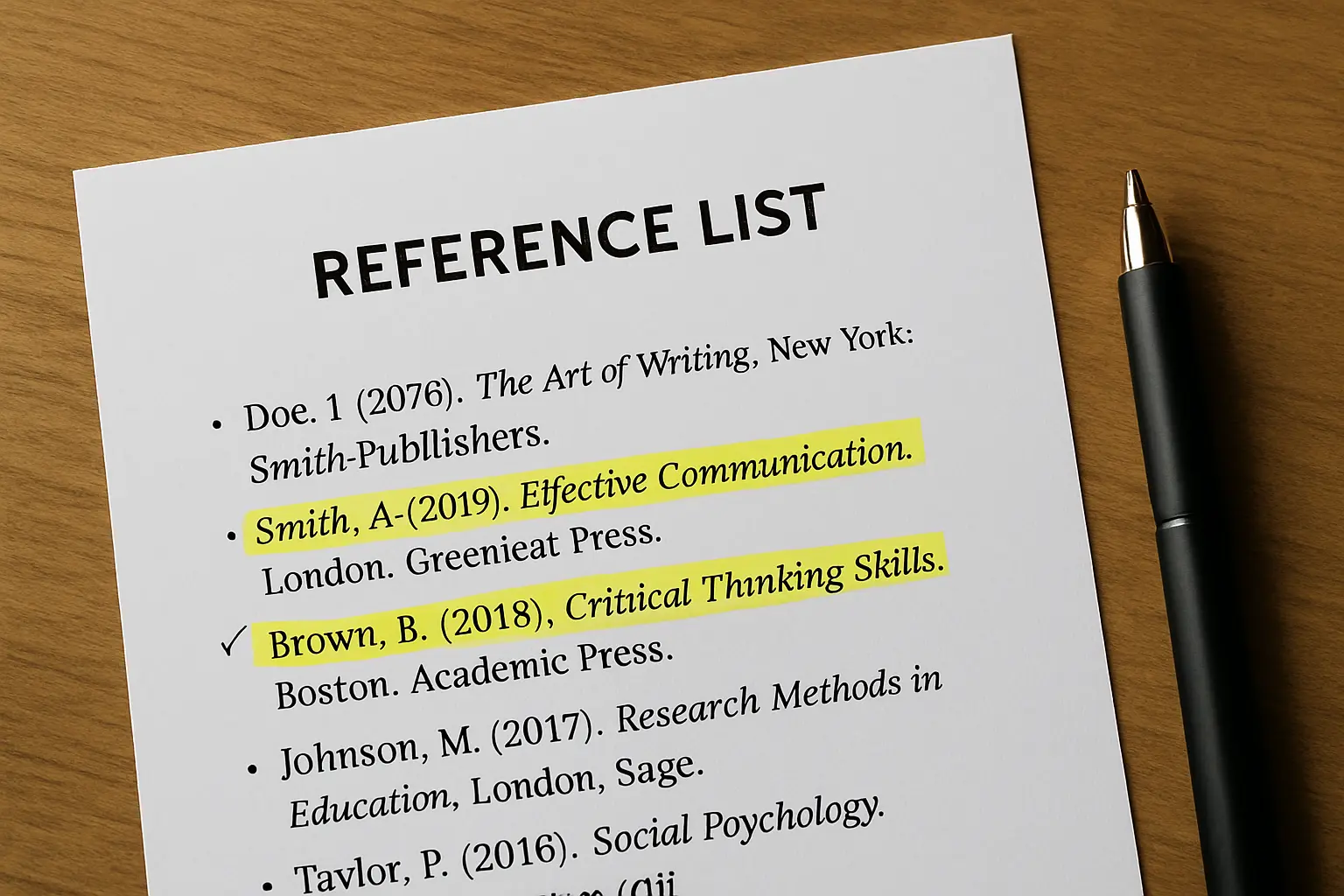
Do this for the sources your argument actually rests on — the studies you cite for a figure, a definition or a finding you build on — rather than for all sixty entries in your reference list. Ten minutes across your ten load-bearing sources is the right budget.
Why the papers were withdrawn
Each record can carry several reasons, so these overlap. The most frequent across the 239:
| Reason | Records |
|---|---|
| Investigation by journal or publisher | 122 |
| Unreliable results or conclusions | 119 |
| Duplication of or in an image | 59 |
| Euphemisms for duplication | 55 |
| Objections by the authors themselves | 50 |
| Concerns about referencing or attribution | 47 |
| Concerns about the underlying data | 37 |
| Plagiarism of or in the article | 23 |
| Concerns about peer review | 22 |
Two things are worth noticing. Plagiarism is not the main driver. It appears in 23 records, against 119 for unreliable results and 59 for image duplication. The dominant failure is not copied text but findings that did not hold up — which is a different problem from the one Nigerian integrity policy is mostly built around, as the guide to acceptable plagiarism percentages in Nigerian universities describes. A similarity checker would not have caught most of these.
And 50 records list objections by the authors, meaning researchers themselves initiated or supported the withdrawal. Retraction is not always a verdict against someone; sometimes it is the correction mechanism working.
Where the retractions sit, by field
The subject tags cluster heavily in the physical and life sciences: materials science 55, biochemistry 41, nanotechnology 35, chemistry 26, environmental sciences 24, chemical engineering 21. By journal, Heliyon accounts for 31 records; by publisher, Springer Nature 40, Elsevier 34 with a further 31 under Cell Press, Taylor and Francis 19, Wiley 17.
If your project sits in education, management, sociology or the other fields most Nigerian undergraduate projects occupy, your topic area is barely represented here. That is a genuine reason to worry less — and also a reason not to write “Nigerian research has an integrity crisis” in your Chapter One, because the data behind that sentence is concentrated in a handful of laboratory disciplines.
One table you will not find above is a ranking of Nigerian universities by retraction count. We could have produced one, and it would have been wrong. The affiliation field in this dataset is unnormalised free text captured at department level — the same university appears under many different strings, one research group accounts for 28 records on its own, and there is no consistent institution identifier. Counting those strings would manufacture a league table out of a formatting artefact. It is the sort of number that spreads quickly and cannot be defended, so we have not published it.
How to use this in your project, without overclaiming
- As a methods safeguard, not a headline. The strongest use is a sentence in your methodology saying you verified the retraction status of your key sources. That is a real quality claim and almost no undergraduate project makes it.
- Give the notice year and the publication year separately. They tell different stories and conflating them is the commonest error with this dataset.
- Attribute and date it. “Retraction Watch database, via Crossref Labs, retrieved 19 August 2026.” These files are updated continuously, so an undated figure stops being checkable — the same discipline the enrolment figures need in how many university students there are in Nigeria.
- Do not convert 239 into a rate. Dividing it by an output figure from a different source, with a different coverage rule and a different date, produces a ratio that looks precise and means very little.
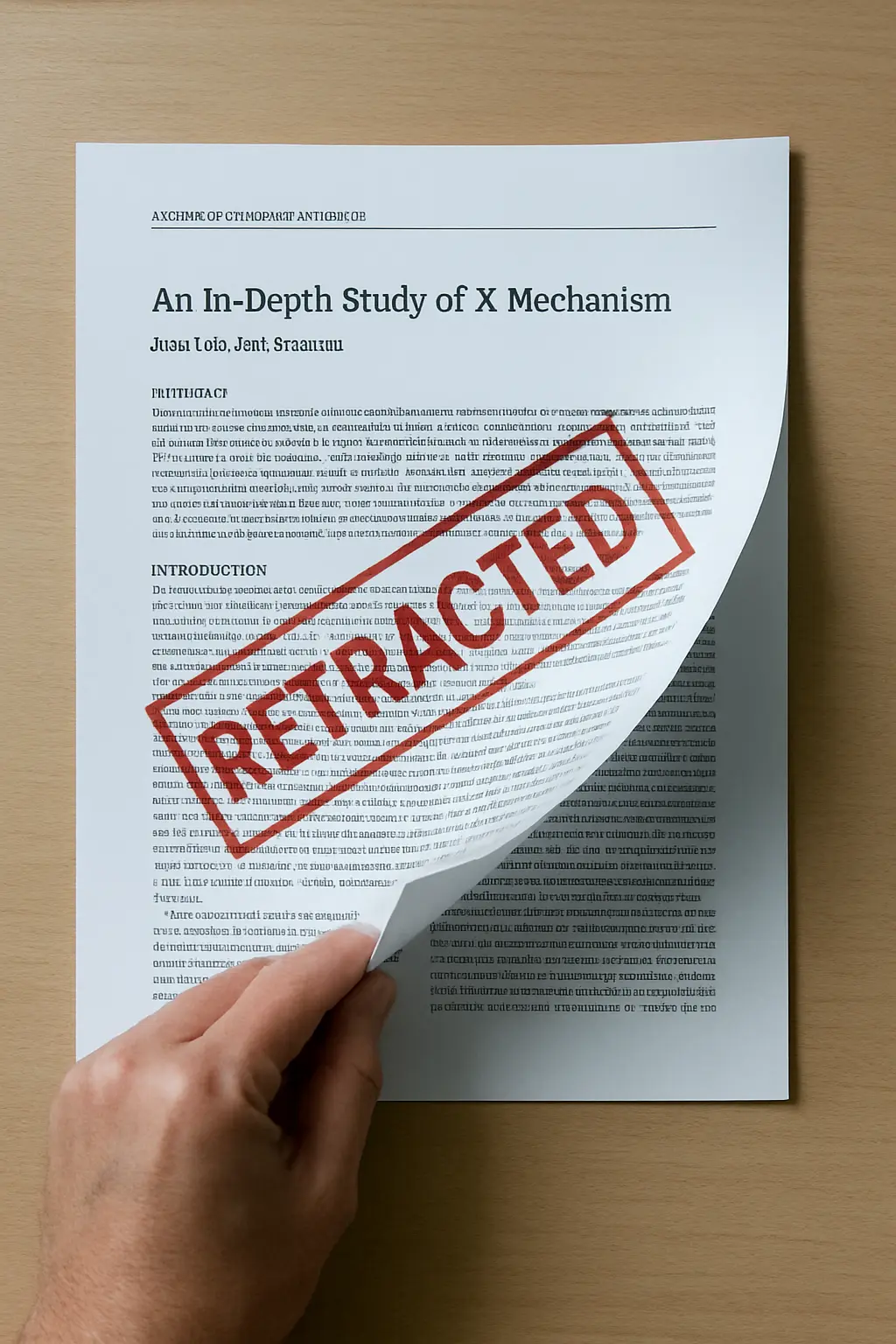
- Never cite a retracted paper as though it stands. If a withdrawn study is genuinely relevant to your argument, you may still discuss it — but say plainly that it was retracted, in what year, and why, and do not rely on its findings. A panel that recognises the paper will ask, and the question list in what is asked during a project defence already covers whether you actually read your sources.
The habit that prevents all of this is upstream: record each source properly when you first find it, with its DOI, so that checking it later is a lookup rather than an archaeology exercise. That is what a reference manager is for, as set out in the Mendeley versus Zotero comparison, and the DOI is also the field most citation generators will fill the rest of the entry from. Building that reference list is the core work of Chapter Two, and a fabricated or withdrawn source there is the defect that most reliably survives to the defence — which is also why an AI-invented citation is so dangerous, a point covered in whether you can use AI on a final year project.
The method, and the trap that quietly shrinks the answer
The full Retraction Watch database is published openly by Crossref Labs as a single CSV. Anyone can download it and count.
Check the row count before you compute anything. An earlier attempt at this download returned HTTP 200 and a perfectly well-formed CSV — that was silently truncated to 20,368 rows. It parsed without a single error and would have produced a Nigeria figure of 153 rather than 239 — a third of the record set missing, with nothing in the file to say so. A complete file at the time of writing is 65,950,236 bytes and 71,871 rows. We re-downloaded on 19 August 2026 and confirmed both figures before recomputing every number on this page.
The general rule is worth more than this dataset: a successful HTTP status is not evidence that you received the whole file. Any time you compute a statistic from a bulk download, verify the row count or byte size against what the publisher says it should be. A number derived from a truncated file is wrong in a way that no amount of careful arithmetic afterwards will reveal.
Keep every source attached to the record you checked
Tesify holds your chapters in the structure your department expects and keeps each citation tied to the source you actually opened, so a reference you verified in August can still be traced at your defence in November. Start on the free plan, alongside 9,000+ students and 15,000+ chapters, with every word still written by you.
Frequently asked questions
How many Nigerian research papers have been retracted?
239 records carrying a Nigerian author affiliation appear in the Retraction Watch database as at 19 August 2026, of which 234 are formal retractions. That places Nigeria 37th of the 184 countries represented.
How do I check whether a paper has been retracted?
Open the publisher’s page and look for “RETRACTED” in the title, then paste the DOI after https://api.crossref.org/works/ in your browser and search for updated-by with type retraction. PubPeer is a useful third check for concerns raised before a formal notice.
What happens if I cite a retracted paper in my project?
It undermines whatever argument rested on it, and a panel member who knows the paper will raise it. If the study is still relevant you may discuss it, but state that it was retracted and why, and do not treat its findings as standing evidence.
Are recent papers safer to cite?
Not from this point of view. Two-thirds of the withdrawn Nigerian-affiliated papers were published between 2019 and 2023, and the median gap between publication and retraction is 1.8 years. Recent papers are more current but have had less time to be checked.
Why did Nigerian retractions jump in 2025?
97 notices were issued in 2025 against 24 in 2024. Part of that is more withdrawals; part is publishers running large retrospective integrity sweeps, which raises every country’s count at once. Present both explanations rather than only the first.
Is plagiarism the main reason papers get retracted?
No. Plagiarism appears in 23 of the 239 records, while unreliable results or conclusions appear in 119 and image duplication in 59. A similarity checker would not have detected most of these.
Which Nigerian universities have the most retractions?
We deliberately do not publish that table. The affiliation field is unnormalised free text recorded at department level, so the same university appears under many strings and one research group accounts for 28 records alone. Any ranking built from it would be an artefact of formatting rather than a finding.
Does a retraction mean the authors committed fraud?
Not necessarily. 50 of the 239 records list objections by the authors themselves, and honest error, image mix-ups and publisher-side peer review failures all lead to retraction. It is a correction mechanism as well as a sanction.
Can I use this data in my Chapter One?
Yes, as background, provided you name the source and the date you retrieved it and keep the notice year separate from the publication year. It is context rather than a finding, so it does not belong in your results chapter.
Where do I get the dataset myself?
Crossref Labs publishes the full Retraction Watch database as an open CSV. Download it, confirm the row count matches the published size before computing anything, and filter the country column.
My field is education, not chemistry. Does this apply to me?
Less so. The retractions cluster in materials science, biochemistry, nanotechnology and chemistry, and the social sciences are barely represented. Check your load-bearing sources anyway, but do not import a laboratory-science problem into a social-science background section.
Should I mention the retraction check in my methodology?
Yes, in one sentence, if you did it. Saying that the retraction status of key sources was verified and giving the date is a genuine quality claim that costs you a line and distinguishes your chapter from almost every other one on the pile.