Tag: citation

  • Mendeley vs Zotero for Nigerian Students: Which Reference Manager Should You Use? (2026)

    Mendeley vs Zotero for Nigerian Students: Which Reference Manager Should You Use? (2026)

    Mendeley vs Zotero for Nigerian Students: Which Reference Manager Should You Use? (2026)

    Mendeley and Zotero compared, from each vendor’s published information, August 2026
    Zotero Mendeley
    Free storage 300 MB 2 GB
    Paid storage 2 GB $20/year · 6 GB $60/year · unlimited $120/year Published on the vendor’s pricing page
    Citation styles Over 9,000 Style support via its Word plugin
    Word processor support Word, LibreOffice, Google Docs Microsoft Word
    Platforms Mac, Windows, Linux, iOS, Android Desktop and browser
    Sync Optional — works fully offline if you never sync Cloud library is central to the product
    Ownership Open source, independent nonprofit Elsevier
    Group libraries Free; group files draw on the owner’s storage Groups with shared libraries and annotation
    Quick bibliography without an account ZoteroBib Not offered as a separate tool

    Prices are the vendors’ published figures in US dollars as at August 2026. Naira equivalents move with the exchange rate and card availability, so check the current rate before committing — and note that the free tiers are where most final year students will stay.
    Flat vector illustration comparing two reference manager libraries side by side

    The ranking, with the criteria stated

    I am ranking on four things that actually decide the outcome for a Nigerian final year project: whether the tool can produce the style your department requires, what it costs you in data, what it costs you in money, and whether you can still work when connectivity fails.

    1. Zotero — the better default

    Who it suits. Almost every undergraduate and postgraduate writing a project in Nigeria, and particularly anyone whose department has not yet confirmed its referencing style.

    Why it wins. Zotero supports over 9,000 citation styles and generates references directly inside Word, LibreOffice and Google Docs. That style coverage is not a vanity number in this market. As we found when checking what referencing style Nigerian universities actually require, one major university permits any of seven named styles chosen by discipline while another mandates its own in-house manual. A tool that can switch style in one click is worth a great deal when the answer to “which style?” arrives late.

    The second reason is connectivity. Zotero states that it can optionally synchronise across devices. Optional is the operative word: you can run the whole library locally and never spend a megabyte on sync. On metered mobile data that is a real, recurring saving rather than a feature bullet.

    It is also open source and developed by an independent nonprofit, which means the product is not a lead-generation surface for a publisher’s catalogue.

    Where it falls short. 300 MB of free storage is small. If you sync PDFs of a hundred journal articles you will exhaust it. The workaround is straightforward — store PDFs locally and sync only your bibliographic records — but you have to know to do it, and nothing in the interface forces the realisation on you.

    2. Mendeley — the runner-up, and the better free storage deal

    Who it suits. Students who want their PDF library in the cloud without paying, and who work mainly in Microsoft Word on reliable connectivity.

    Why it places second rather than first. Mendeley offers 2 GB of free storage, which is roughly seven times Zotero’s free tier and genuinely useful if you are collecting a large PDF library. It imports PDFs and whole folders in one action, has a browser Web Importer, and offers Watched Folders that import automatically from a chosen desktop folder. Groups support real-time collaboration on shared libraries.

    Where it falls short. The cloud library is central rather than optional, which is exactly the wrong shape for a student on intermittent or metered connectivity. It is owned by Elsevier, a publisher — not disqualifying, but worth knowing when you are choosing where your entire research library will live for the next two years.
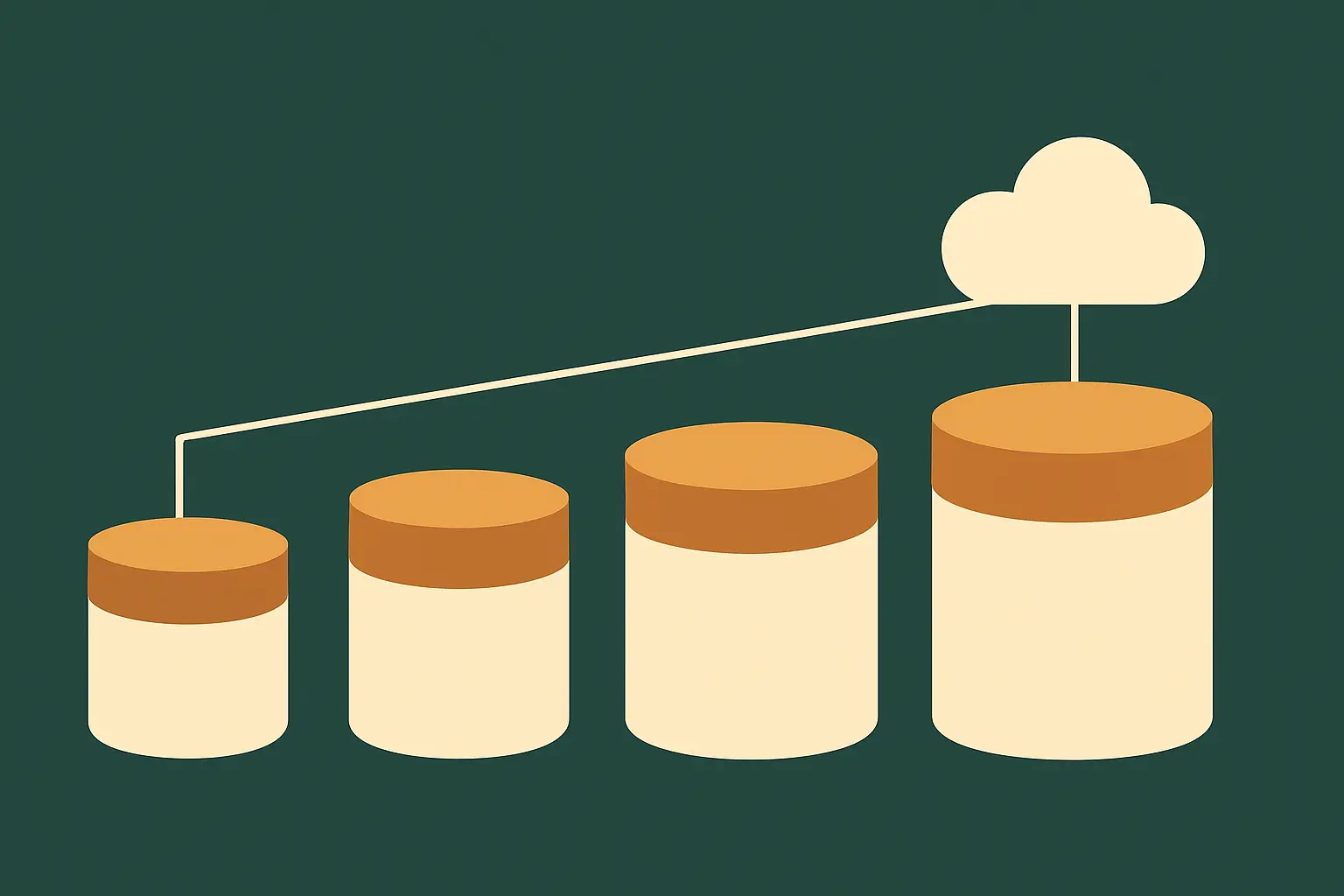
    Flat vector illustration of cloud storage limits shown as containers of different capacity

    3. Doing it by hand — not a ranking, a warning

    Most Nigerian projects are still referenced manually, and manual referencing is where marks quietly disappear. It is not that students cannot format a citation. It is that eighty references formatted by hand over six months drift: an initial here, a missing year there, one entry in a style the writer abandoned in March.

    If you will not use a manager, at least keep a single reference file from day one and add to it the moment you cite something. The failure mode is never the formatting. It is the source you cannot find again.

    Why the free tier is where this decision is actually made

    Almost no Nigerian undergraduate buys reference-manager storage, and neither tool requires it. So the honest comparison is not between the paid plans but between what each tool does at zero cost, and that changes the weighting considerably.

    At zero cost, Mendeley gives you a comfortable cloud library and Zotero gives you an uncomfortable one. But at zero cost Zotero also gives you a complete local library with no cloud at all, and that is a different kind of offer. If your working pattern is a laptop that goes online in bursts — at a cyber café, on campus wifi, on a tethered phone when the budget allows — then a tool whose value does not depend on being connected is worth more than one with a bigger cloud allowance.

    Run the numbers on your own situation rather than on the storage figures alone. A student who reads mostly on campus and syncs nightly will find Mendeley’s 2 GB genuinely more convenient. A student paying for every megabyte will find Zotero’s optional sync worth more than seven times the storage.

    The recommendation

    Use Zotero. If your priority is free cloud storage for a large PDF library, use Mendeley instead.

    The deciding factor is style flexibility on a market where the required style is genuinely unpredictable, combined with the ability to work entirely offline. Storage is a solvable problem — keep PDFs on your own machine — while being unable to produce the style your department demands, three days before binding, is not.

    What neither tool will do for you

    This is where students over-trust the software, so it is worth being blunt.

    A reference manager formats citations. It does not verify that a source exists, that you read it, or that it says what you claim. It will format a fabricated reference as neatly as a real one. Every entry in your library should be a document you actually opened.

    Nor does it decide your style for you. Both tools will happily produce a beautifully formatted APA reference list for a department that requires something else entirely. Confirm the requirement first, then set the tool.

    And neither one protects you on integrity. A correctly formatted citation attached to a paraphrase you did not attribute is still a problem, and the policies that bind you vary by institution — one publishes a 20% limit, another sets no percentage and requires a signed declaration instead.

    Practical setup advice for a Nigerian project

    1. Install the desktop application, not just the browser extension. The desktop library is what keeps working when the network does not.
    2. Decide your sync policy on day one. If data is expensive, sync bibliographic records only and keep PDFs local.
    3. Install the word processor plugin before you start writing, not after Chapter Two, because retrofitting citations into finished text is slower than writing them in place.
    4. Set the style once your department confirms it, then leave it alone. Switching repeatedly invites mixed formatting.
    5. Back up the library folder to an external drive or cloud folder. A failed laptop in submission month is a common and entirely survivable event if you have a copy.
    6. Check every automatically imported record. Imported metadata is frequently wrong about page ranges, editions and author initials, and the tool will reproduce that error in all eighty citations.

    Frequently asked questions

    Is Zotero free?

    The software is free and open source. Online storage above 300 MB is paid, at published annual tiers, but you can use the software fully without buying storage.

    Is Mendeley free?

    It offers a free tier including 2 GB of storage, with paid options published on its own pricing page.

    Which has more free storage?

    Mendeley, by a wide margin — 2 GB against Zotero’s 300 MB.

    Which supports more citation styles?

    Zotero states support for over 9,000 citation styles.

    Can I use these tools offline?

    Zotero’s sync is optional, so it can run entirely locally. Mendeley’s cloud library is more central to how the product works.

    Do they work with Google Docs?

    Zotero lists Word, LibreOffice and Google Docs. Mendeley’s plugin is for Microsoft Word.

    Can I share a library with my project group?

    Both support group libraries. In Zotero, groups are free and group file storage draws on the group owner’s storage account.

    Will a reference manager get my style right automatically?

    Only if you select the right style. Confirm what your department requires first — Nigerian institutions do not share a single default.

    Do I still need to check the references?

    Yes. Imported metadata is often imperfect, and an error in the record repeats in every citation of that source.

    Can I switch tools later?

    Both support standard bibliographic export formats, so migration is possible — but it is far less painful in month one than in month nine.

    The references are the easy half

    A reference manager solves formatting. It does not write Chapter One, structure the five chapters, or turn a pile of sources into an argument your panel will accept.

    Tesify handles that side: chapter structure your department expects, drafting section by section, and citations attached to the sentences that need them as you write — 100% written by you, alongside 9,000+ students and 15,000+ chapters.
    Write your project with Tesify

  • How to Reference Your Project the Way Your Nigerian University Actually Requires (2026)

    How to Reference Your Project the Way Your Nigerian University Actually Requires (2026)

    How to Reference Your Project the Way Your Nigerian University Actually Requires (2026)

    Most Nigerian students are told, informally, that “we use APA”. Many then format an entire reference list in APA and discover at submission that their department wanted something else — or that their university publishes a house style of its own that resembles APA without being it.

    Reformatting eighty references by hand in submission week is an entirely avoidable disaster. This guide shows how to find the rule that actually binds you, and how to apply it without losing days.

    Flat vector illustration of several referencing styles arranged as different citation cards

    Is APA the Nigerian standard?

    No. Two of the country’s most established universities publish postgraduate guidelines that point in different directions.

    Obafemi Awolowo University permits a choice. Its Postgraduate College’s Guidelines for Writing Theses for Higher Degrees, dated January 2026, states that the style used shall vary from one discipline to another and that the author should maintain a consistent style throughout the thesis, conforming to one of the following — American Psychological Association (APA), Modern Language Association (MLA), Chicago, Vancouver, Harvard, Oxford Standard for Citation of Legal Authorities (OSCOLA), or American Medical Association (AMA) — “or any other one applicable to specific faculties or disciplines”. The guidelines add a condition students routinely miss: the latest version applicable must be used.

    The University of Ibadan does not offer a menu. Its Postgraduate College publishes the University of Ibadan Manual of Style, described in the 2023 revised edition as “a composite simplification of some standard style sheets”, and this unified style of referencing “is hereby recommended for all graduate students and scholars involved in seminars, symposia, examinations and allied research for submission within the University of Ibadan postgraduate system”. The manual states its objective plainly: to achieve consistency in the presentation style of academic writing. It is also reviewed on a cycle — the guidelines note it will be available for review and emendation after every fifth consecutive year of operation.

    Published postgraduate referencing requirements at two Nigerian universities
    Institution Requirement Practical consequence
    Obafemi Awolowo University One of seven named styles, chosen by discipline, applied consistently, latest version You must confirm which style your discipline uses, then check you have the current edition
    University of Ibadan The University of Ibadan Manual of Style A generic APA guide will not match; you need the institution’s own manual

    So the honest answer to “what referencing style do Nigerian universities use” is: it depends on your university, your faculty and your discipline, and there is no national default to fall back on.

    Step 1: Find the document that sets the rule

    Ask three questions, in this order, and get answers in writing:

    1. Does my institution publish a house style? If yes, that ends the question — use it.
    2. If not, which style does my department require? Not the faculty, not the university generally — the department that will mark the work.
    3. Which edition? Styles are revised, and “the latest version applicable must be used” is an explicit requirement at OAU. An in-text citation formatted to a superseded edition is still wrong.

    Step 2: Understand what every reference entry has to do

    Styles differ in punctuation and order, not in purpose. The University of Ibadan’s manual puts it usefully: a reference entry should contain four elements, accessible by answering four questions — Who (the name of the author or editor), When (the year or date of publication), What (the title of the publication), and Where (the place or source of publication).

    If you can answer those four for every source, you can format that source in any style. If you cannot answer them — and this is common with material found loose online — you have a source problem, not a formatting problem. The manual also states the underlying test: all references should be readily accessible to the reader. A citation the reader cannot follow has failed regardless of how neatly it is punctuated.

    Step 3: Get the reference list mechanics right

    The list is where marks are lost, because errors there are countable. OAU’s guidelines set out the mechanics for the Harvard system in detail, and the same logic carries across author-date styles:

    • Alphabetical by author surname.
    • Hanging indent — lines after the author’s name are indented so that only surnames sit at the left margin, which is what makes a list scannable.
    • Same author, multiple works: chronological order.
    • Several papers by the same author in one year: add suffixes a, b, c after the year, and use the same suffix in the in-text citation.
    • Repeated authors need not be retyped; a long dash may stand in for the name in subsequent entries.
    • Multiple authorship: the first author’s name determines alphabetical position.

    Flat vector illustration of a consistent reference list being assembled alphabetically

    Step 4: Know your discipline’s exception

    Discipline matters more than most students expect, and OAU’s own document shows why. Its prescribed preliminary pages include a list of cases and statutes, “applicable to candidates from some Faculties such as the Faculty of Law”.

    That is not a formatting detail; it is a different apparatus. A law project cites cases and legislation, which is precisely what OSCOLA exists to handle and what APA handles poorly. Similarly, Vancouver and AMA are numbered systems used in medical and health disciplines, where an author-date citation in the middle of a clinical sentence would be intrusive.

    If you are in law, medicine, or a humanities discipline where MLA or Chicago is normal, do not assume the social-science default applies to you.

    Step 5: Reference as you write, not afterwards

    This is the single highest-value habit in this guide, and it costs nothing.

    Every source goes into your list the moment you cite it in the text. The reason is not tidiness. Reconstructing a citation three months later means finding the source again, and the sources you fail to find are exactly the ones that become unattributed passages — which is how an honest student ends up facing an integrity question. Our guide to what Nigerian universities actually require on plagiarism sets out what the published policies say.

    Two practical rules follow. Never paste a passage into your draft without its citation attached in the same action. And never cite a source you have not opened — a reference copied from another project’s list carries that project’s errors into yours, and examiners who know the literature spot it immediately.

    Step 6: Run the consistency check before you bind

    1. Every in-text citation appears in the reference list. Check by working through the text, not the list.
    2. Every list entry is cited somewhere in the text. Padding the list with uncited sources is visible and counts against you.
    3. Years match between text and list for every entry.
    4. Author spellings match, including initials.
    5. One style throughout. Mixed styles are the most common formatting fault and the easiest to fix early.
    6. Your Chapter One claims are all supported — the background is where uncited assertions hide.
    7. The list format matches the preliminary pages requirement for your project structure, including any separate list of cases and statutes.

    Frequently asked questions

    What referencing style do Nigerian universities use?

    There is no single national style. OAU permits one of seven named styles chosen by discipline; the University of Ibadan requires its own manual of style. Confirm with your department.

    Is APA acceptable for a Nigerian project?

    Often, but not universally. APA is among the styles OAU permits. At an institution with a house style, a generic APA format will not match the requirement.

    Can I mix two referencing styles?

    No. Consistency throughout is the explicit requirement in both documents quoted here, and mixing is among the most visible faults in a submitted project.

    Which style should a law project use?

    OSCOLA is designed for legal authorities and is among the styles OAU names. Law projects also typically need a separate list of cases and statutes in the preliminary pages.

    Which style do medical and health projects use?

    Vancouver and AMA are numbered systems used in these disciplines and are both among the styles OAU names. Confirm with your department.

    What if two of my sources are by the same author in the same year?

    Add suffixes a, b, c after the year, and use the matching suffix in the in-text citation so the reader can tell them apart.

    Do I need a reference manager?

    It is not required, but it removes most manual formatting work and makes switching styles trivial if your department changes its mind.

    How do I cite a source with no author or date?

    Ask first whether you should be citing it at all. If the who and when cannot be answered, the source may not meet the standard of being readily accessible and verifiable.

    What edition of a style should I use?

    The latest applicable version. OAU states this explicitly, and citing to a superseded edition is a correctable fault that examiners do flag.

    Make the list build itself

    Referencing is mechanical work that punishes inconsistency and rewards nothing except getting it right. It is the ideal thing to automate and the worst thing to leave until the final week.

    Tesify keeps your citations attached to the sentences that need them and assembles the reference list as you write, in the style your department requires — 100% written by you, alongside 9,000+ students and 15,000+ chapters.
    Build your project and bibliography with Tesify